Janu Basti or Agnikarma: Which Is Better for Knee Pain?
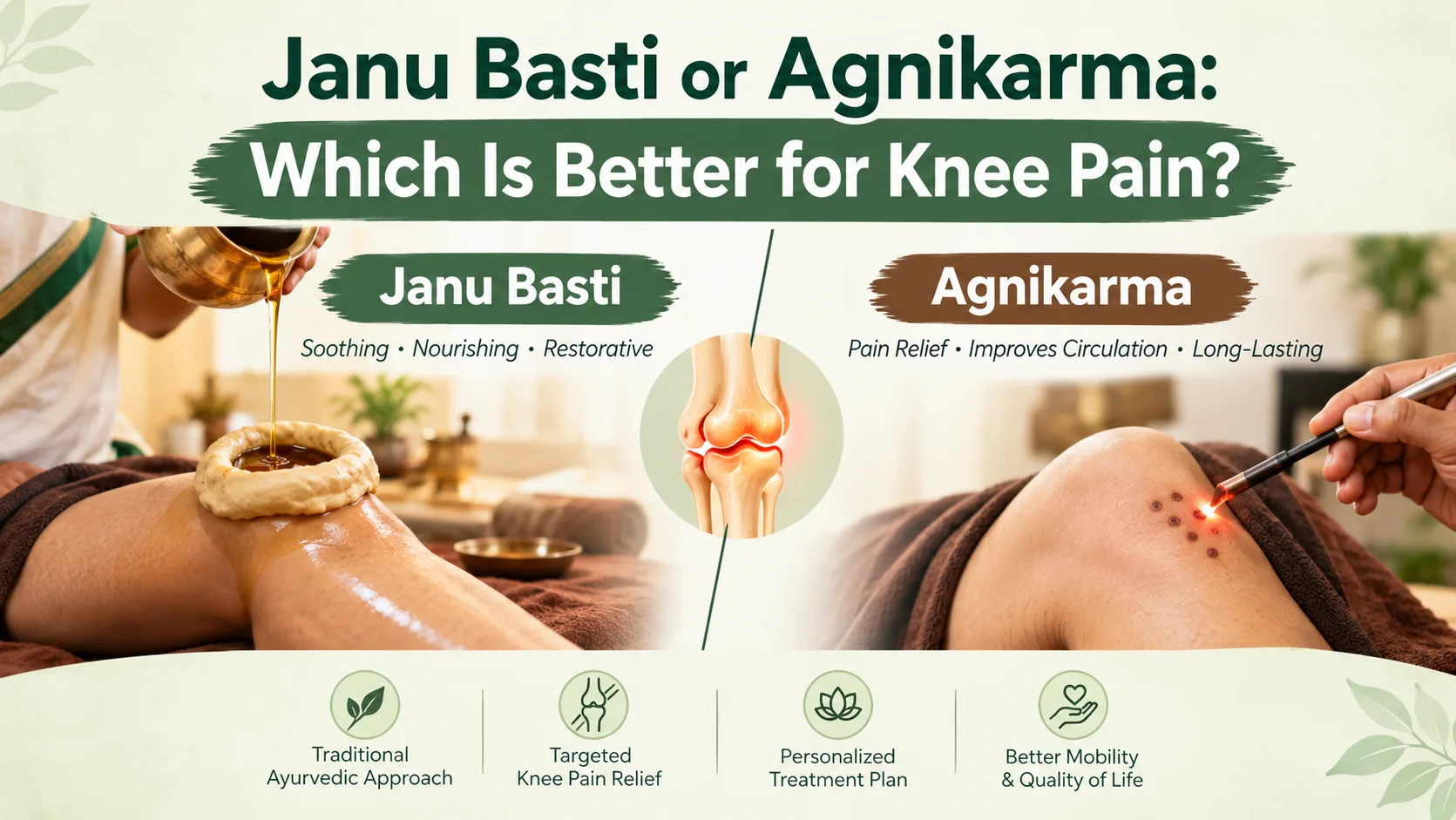
If your knees crackle louder than your morning cornflakes, here's the short answer: Janu Basti is the gentler, oil-based route best for early-to-moderate knee pain, while Agnikarma (controlled heat therapy) is the go-to for stubborn, deep-rooted pain that just won't budge. Neither is "better" in isolation; it genuinely depends on how bad your knees are throwing a tantrum.
Now let's actually unpack why, because your knees deserve more than a one-line verdict.
What Even Is Janu Basti?
Think of Janu Basti as a warm oil spa day, except it's exclusively for your knee. A dam made of black gram dough is built around the knee, and warm medicated oil (usually Ksheerbala Taila) is poured in and left to sit for 15–20 minutes. It's oddly relaxing; like your knee finally got the vacation it's been begging for since your college trekking trip.
This is a classic Ayurvedic treatment for knee pain because it works through Snehana (oleation) and mild Swedana (sudation), nourishing the joint, easing stiffness, and calming aggravated Vata dosha; which, in plain English, is Ayurveda's way of saying "the thing causing your creaky, dry, painful joint."
📩 Ask a Kidney Expert (Free 10-Min Consultation)
What Even Is Agnikarma?
Agnikarma for knee arthritis sounds dramatic (it literally means "fire therapy"), but it's a precise, quick application of controlled heat; usually via a heated metal probe; to specific pain points around the knee. It's not a bonfire on your leg, we promise. It's more like a very targeted, very confident tap that tells your nervous system to stop overreacting to pain signals.
This is typically used when pain has camped out for months, ignored every oil massage and every painkiller, and set up permanent residence. A study on thermal micro-cautery for painful knee osteoarthritis described how the heated rod is applied precisely at the agreed pain point, generating a controlled micro-burn before a cooling herbal application is used, with heat applied evenly to the agreed pain point using a metal rod heated in open flame, followed by a cooling herbal cream.
The Comparison Table Nobody Asked For (But Everyone Needs)
| Factor | Janu Basti | Agnikarma |
| Vibe | Spa day for your knee | "We mean business" |
| Best for | Mild to moderate pain, stiffness | Chronic, stubborn pain |
| Sensation | Warm, soothing, borderline nap-inducing | Quick, sharp, "did that just work?" |
| Sessions needed | Usually more sittings | Often fewer, spaced-out sittings |
| Fear factor | Zero | Slightly higher (until you realise it's totally fine) |
| Good for | Early knee joint treatment in ayurveda | Deep-seated joint pain treatment in Ayurveda |
What Does Science Actually Say?
This isn't just grandma's home remedy talk; there's real clinical literature behind both.
- A comparative clinical study on Agnikarma with different metal probes (gold and panchadhatu rods) in knee osteoarthritis found the therapy effective in relieving pain, stiffness and improving mobility in Janu Sandhigata Vata patients, where the objective was to evaluate the efficacy of Agnikarma in the management of osteoarthritis of the knee joint by improving mobility and reducing pain and stiffness.
- Another clinical trial combining Agnikarma with Panchatikta Guggulu reported around 70% relief in pain for the Agnikarma group, compared to about 62% relief in the control group; a meaningful difference for something that sounds this old-school.
- On the Janu Basti side, a randomized comparative study found it produced 55% relief in pain, nearly 86% relief in swelling, and about 79% improvement in walking distance; basically your knee going from "grumpy retiree" to "up for a walk."
Point being: this isn't guesswork. These are actual peer-reviewed, published studies, not just vibes and turmeric milk.
Home Remedies Worth Trying (Alongside, Not Instead Of, Proper Treatment)
- Warm sesame or castor oil massage before bed
- Turmeric + warm milk (the OG best herbs for joint pain combo)
- Fenugreek seed water on an empty stomach
- Hot compress using a cloth-wrapped hot water bag
Yoga & Exercises That Actually Help
- Quadriceps sets; tighten the thigh muscle, hold, release
- Straight leg raises; no bending, just lifting
- Gentle Surya Namaskar (skip it if pain is acute)
- Walking in water; your knees will thank you, loudly
The Diet Plan Your Knees Are Silently Begging For
- Load up on anti-inflammatory foods: turmeric, ginger, garlic
- Add omega-3s; flaxseeds, walnuts
- Cut back on fried, processed, overly salty food
- Stay hydrated (cartilage needs water more than your Instagram feed needs another sunset pic)
About Dr. Puneet Dhawan
Dr. Puneet Dhawan is a well-known name when it comes to Ayurvedic joint and pain management in India, particularly for therapies like Janu Basti and Agnikarma. Patients often turn to him not for quick fixes but for a properly assessed, personalised treatment plan; because as you've probably gathered by now, knee pain isn't one-size-fits-all.
Key Takeaways
- Janu Basti = gentle, oil-based, best for early or moderate knee pain
- Agnikarma for knee arthritis = targeted heat therapy for chronic, stubborn pain
- Both have actual clinical studies backing their efficacy
- Combine treatment with the right diet plan, yoga & exercises, and home remedies
- Always consult a qualified Ayurvedic physician like Dr. Puneet Dhawan before starting either
FAQs
Is Agnikarma painful?
Honestly, it's quick and far less dramatic than it sounds; most people describe it as a brief warm pinch, not agony.
How many sessions of Janu Basti are needed for knee pain?
It varies person to person, but most people start noticing relief within a couple of weeks of regular sessions.
Can I do both Janu Basti and Agnikarma together?
Yes, many Ayurvedic physicians combine both based on how severe and how old the knee pain is.
Is Ayurvedic treatment enough to avoid knee surgery?
For many people with mild to moderate osteoarthritis, yes; but severe, advanced cases still need a doctor's proper evaluation.
Can knee cartilage actually regenerate with Ayurveda?
Ayurveda focuses more on nourishing and slowing degeneration of the joint rather than promising full cartilage regrowth, so keep expectations realistic.
---
Disclaimer: This blog is for general informational purposes only and isn't a substitute for professional medical advice. Please consult a qualified Ayurvedic physician before starting any treatment, especially if you have chronic or severe knee pain, other medical conditions, or are currently on medication.