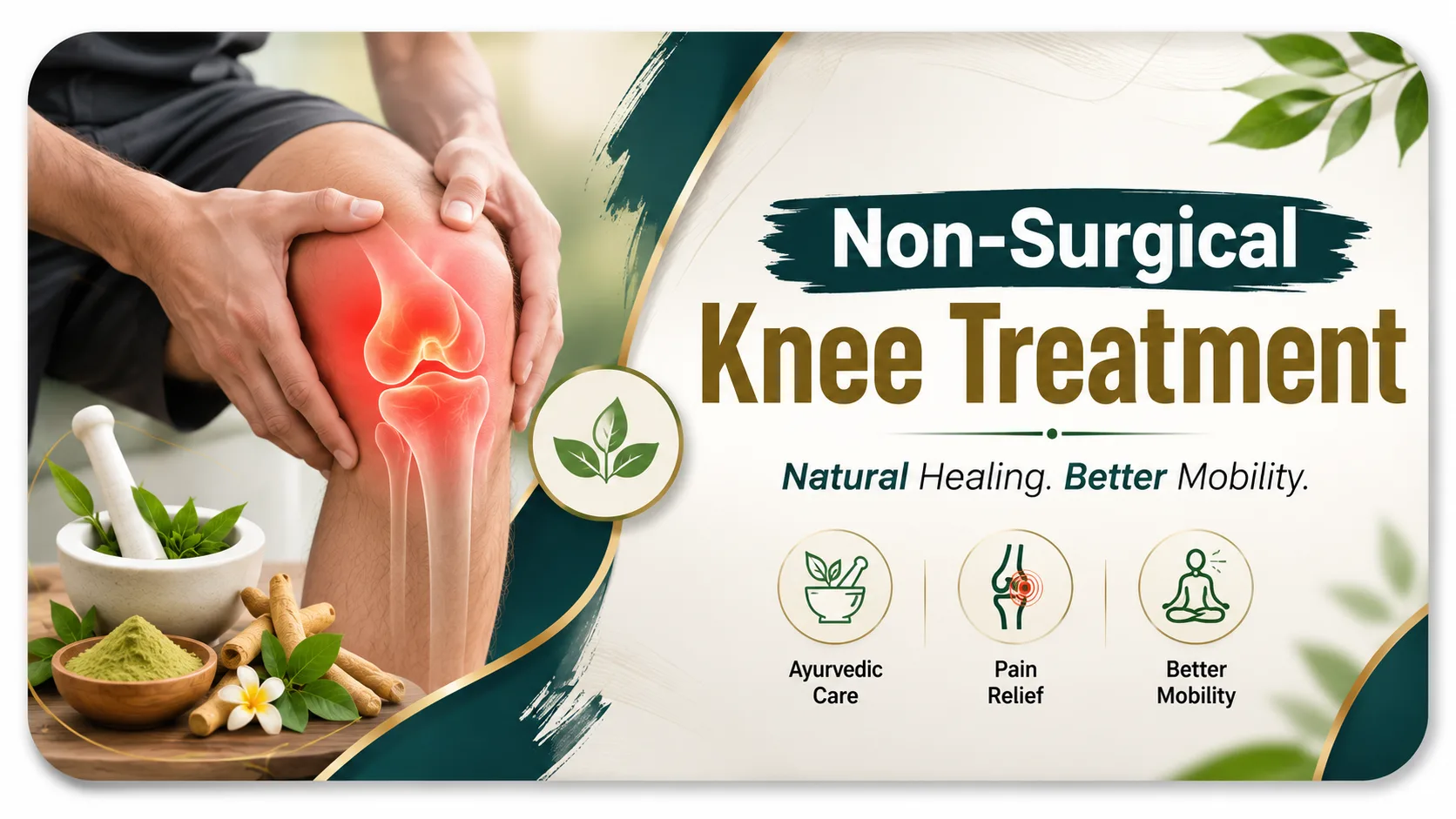
Ayurvedic Treatment for Knee Arthritis
Remember when your knees used to bend without sounding like a bag of potato chips? Good times. If getting up from the couch now requires a countdown, a pep talk, and a prayer, you might be dealing with knee arthritis. जब घुटने जवाब देने लगें, तो समझो ज़िंदगी की रफ्तार थोड़ी धीमी हो रही है। But don't worry, you aren't destined to just sit on the sidelines. Let's look at how traditional wisdom can help you get your groove back.
What Is Knee Arthritis?
In simple terms, it is the gradual wearing away of the protective cartilage that cushions your knee joints. Think of cartilage as the ultimate shock absorber. When it wears thin, your bones start rubbing against each other like an awkward slow dance. गठिया का सीधा मतलब है जोड़ों में सूजन और दर्द। In the knee joint, this friction leads to severe stiffness. While there are over a hundred types of arthritis, the ones most commonly turning your knees into a daily weather forecast station include osteoarthritis (wear-and-tear) and rheumatoid arthritis (an autoimmune villain).
Types of Knee Arthritis
Not all knee pain is created equal. Your knees might be throwing a tantrum for a few different reasons.
Osteoarthritis
This is the "mileage" arthritis. It is the most common type and happens when the cartilage simply wears down over time due to age, heavy use, or just living life.
Rheumatoid Arthritis
This is an autoimmune condition where your body’s immune system gets confused and decides to attack the healthy lining of your joints. It usually strikes both knees at once and brings a lot of swelling along for the ride.
Post-Traumatic Arthritis
Did you have a nasty sports injury or a bad slip years ago? This type develops years after a bone fracture, ligament tear, or meniscus injury, proving that your body unfortunately remembers everything.
| Type | Cause | Common Age |
| Osteoarthritis | Natural wear and tear of cartilage | Typically 50+ years old |
| Rheumatoid Arthritis | Autoimmune disease attacks joints | Can start at any age (often 30–60) |
| Post-Traumatic Arthritis | Past physical injury or trauma | Any age post-injury |
Symptoms of Knee Arthritis
Your knees are excellent communicators; they will definitely let you know when they are unhappy. Keep an eye out for these early signs of knee arthritis:
- Pain: It starts as a dull ache after an active day, but can progress to a constant reminder that you have joints.
- Swelling and Tenderness: Your knee might look a little puffy or feel warm to the touch.
- Morning Stiffness: Feeling like a rusty tin man for the first 30 minutes after waking up. सुबह उठते ही पैर जाम होना इसका सबसे बड़ा लक्षण है।
- Difficulty Walking: Noticeably slowing down or changing your stride.
- Stair Pain: Going downstairs suddenly feels like climbing Mount Everest backwards.
- Clicking, Popping, or Grinding: Hearing a symphony of snaps and cracks every time you bend.
- Reduced Movement: Realizing you can't bend or straighten your leg all the way anymore.
Causes & Risk Factors
Why do knees decide to go on strike? It is usually a combination of lifestyle, luck, and physics.
| Cause | Description |
| Age | The natural wear and tear process as we get older. |
| Obesity | Extra weight adds extra pressure on your load-bearing joints. |
| Injury | Old sports injuries or accidents that destabilize the joint. |
| Autoimmune Disease | Conditions like RA that cause chronic joint inflammation. |
| Genetics | A family history of joint issues (thanks, mom and dad). |
How Is Knee Arthritis Diagnosed?
Before diving into a solution, a doctor needs to map out the problem. This usually involves:
- Symptom Review: Discussing when it hurts, how long it has been going on, and how much it limits your day.
- Physical Examination: Testing your knee's range of motion, checking for swelling, and seeing how you walk.
- X-ray: The standard tool to see if the space between your bones has narrowed (a classic sign of lost cartilage).
- MRI: Used if doctors need a detailed, high-definition look at the soft tissues like ligaments and tendons.
- Blood Tests: Specifically done to check for inflammatory markers or antibodies that point toward Rheumatoid Arthritis.
Treatment Options
Managing joint pain isn't a one-size-fits-all situation. A balanced plan often pulls from several different buckets to find the best treatment for arthritis in the knee joints.
- Lifestyle Changes: Pacing your activities and avoiding high-impact movements.
- Weight Management: Lightening the load on your structural pillars.
- Exercise Therapy: Strengthening the muscles around the knee to take the pressure off the joint.
- Physiotherapy: Targeted movements supervised by a pro to improve flexibility.
- Medicines: Pain relievers and anti-inflammatories to get you through the rough patches.
- Knee Braces: External support to keep things stable while you walk.
- Ayurvedic Management: Holistic therapies focused on long-term relief and healing from within.
- Surgery: Total or partial knee replacement, generally reserved for when other options no longer provide relief.
Ayurvedic Management of Knee Arthritis
If you want to move beyond just masking the pain, turning to a time-tested Ayurvedic Treatment for Knee Arthritis offers an incredibly holistic approach. In Ayurveda, knee arthritis is primarily understood as Sandhigata Vata, where an imbalance of the Vata dosha (the energy of movement and air) leads to dryness and degeneration in the joints. आयुर्वेद में बीमारी को जड़ से खत्म करने पर ज़ोर दिया जाता है, न कि सिर्फ लक्षणों को छिपाने पर।
Ayurveda doesn't just hand you a generic pill; it looks at your unique body constitution to build an individualized treatment plan. Here is what that often looks like:
- Janu Basti: This is the ultimate spa day for your knee. A reservoir made of black gram dough is built around your knee joint, and warm, medicated herbal oils are poured inside. यह घुटनों की ग्रीस (lubrication) को दोबारा बढ़ाने में मदद करता है।
- Agnikarma: A highly localized thermal therapy used to provide rapid relief from intense Knee Arthritis Pain Treatment.
- Panchakarma: A comprehensive detoxification process that removes accumulated toxins (Ama) from the body to reduce systemic inflammation.
- Herbal Medicines: Utilizing powerful natural anti-inflammatories like Shallaki (Boswellia), Guggulu, and Ashwagandha to protect the joints.
- Diet: Shifting toward warm, cooked, and easily digestible foods while cutting out cold, processed meals that aggravate Vata.
- Lifestyle Advice: Prioritizing routine, adequate rest, and protecting your joints from extreme cold or strain.
By combining these therapies, Knee Arthritis Treatment Ayurveda focuses on restoring balance, improving mobility, and rejuvenating the deep tissues naturally.
Can Knee Arthritis Be Managed Without Surgery?
The short answer is yes, absolutely, especially if you catch it in the early to moderate stages. Many people successfully manage their symptoms and live vibrant lives using Knee arthritis treatment without surgery. हर बार ऑपरेशन ही एकमात्र रास्ता नहीं होता; सही समय पर सही देखभाल से घुटने बचाए जा सकते हैं।
However, a truly balanced approach means keeping it real. Your success with non-surgical paths depends on:
- The overall severity and stage of the cartilage loss.
- The specific type of arthritis you have.
- Your current radiological grade (how things look on an X-ray).
- Your level of functional limitation.
A thorough medical evaluation will tell you if a holistic, Non-Surgical Knee Arthritis Treatment is the right primary path for you.
Daily Lifestyle Tips
Small daily habits add up to big wins for your joints. Here is your cheat sheet for keeping your knees happy every single day:
- Exercise: Focus on low-impact knee arthritis exercises like swimming, cycling, or straight-leg raises to keep the surrounding muscles strong without pounding the pavement.
- Weight: Even losing a few pounds dramatically reduces the physical workload on your knees. वजन कम करना घुटनों को एक नया जीवन देने जैसा है।
- Diet: Follow an anti-inflammatory knee arthritis diet packed with whole grains, turmeric, ginger, and omega-3-rich foods while skipping excessive sugar.
- Walking: Keep moving, but listen to your body. Short, frequent walks are much better than one exhausting marathon stroll.
- Footwear: Ditch the sky-high heels or completely flat, unsupportive shoes. Opt for cushioned footwear with good arch support.
- Yoga: Gentle, modified yoga poses can improve your balance, stretch tight hamstrings, and keep your joints fluid.
Investing time in a dedicated Ayurvedic Treatment for Knee Arthritis, along with smart daily habits, can help you protect your joints, avoid the operating room, and keep moving comfortably for years to come.
Frequently Asked Questions (FAQs)
Q: What is knee arthritis?
It’s essentially the wearing down of the protective cushion between your knee bones, leaving them rubbing together uncomfortably.
Q: What causes knee arthritis?
It’s usually a mix of old age wear-and-tear, carrying extra weight, genetics, or an old sports injury coming back to haunt you.
Q: What are the first signs of knee arthritis?
You’ll usually notice a stubborn stiffness when waking up, a dull ache after busy days, or a subtle cracking sound when you bend.
Q: Is knee arthritis permanent?
While the structural cartilage damage can't be reversed, the pain and stiffness definitely don't have to be permanent if you manage it well.
Q: Can Ayurveda help knee arthritis?
Absolutely, it uses soothing warm oils, detox therapies, and natural herbs to reduce inflammation and bring back that lost joint lubrication.
Q: Is walking good for knee arthritis?
Yes, it keeps your joints moving and fluid. Just make sure you wear supportive shoes and don’t overdo it.
Q: What foods should be avoided?
Try to skip processed junk, sugary treats, and deep-fried foods since they act like fuel for internal inflammation.
Q: Which diet supports joint health?
A clean diet rich in warm, cooked foods, anti-inflammatory spices like turmeric and ginger, and healthy omega-3 fats.
Q: Which exercise is best?
Low-impact stuff like cycling, swimming, or straight-leg raises that build muscle around the knee without pounding the joint.
Q: How is rheumatoid arthritis different from osteoarthritis?
Osteoarthritis is mechanical wear-and-tear from life, while rheumatoid arthritis is an autoimmune condition where your body accidentally attacks its own joints.
Q: Can knee arthritis be treated without surgery?
Yes, using targeted exercises, natural treatments, and weight management can do wonders for keeping you out of the operating room.
Q: When should surgery be considered?
Only when the pain is constant, your mobility is severely shot, and nothing else, from therapy to Ayurveda, is giving you relief.