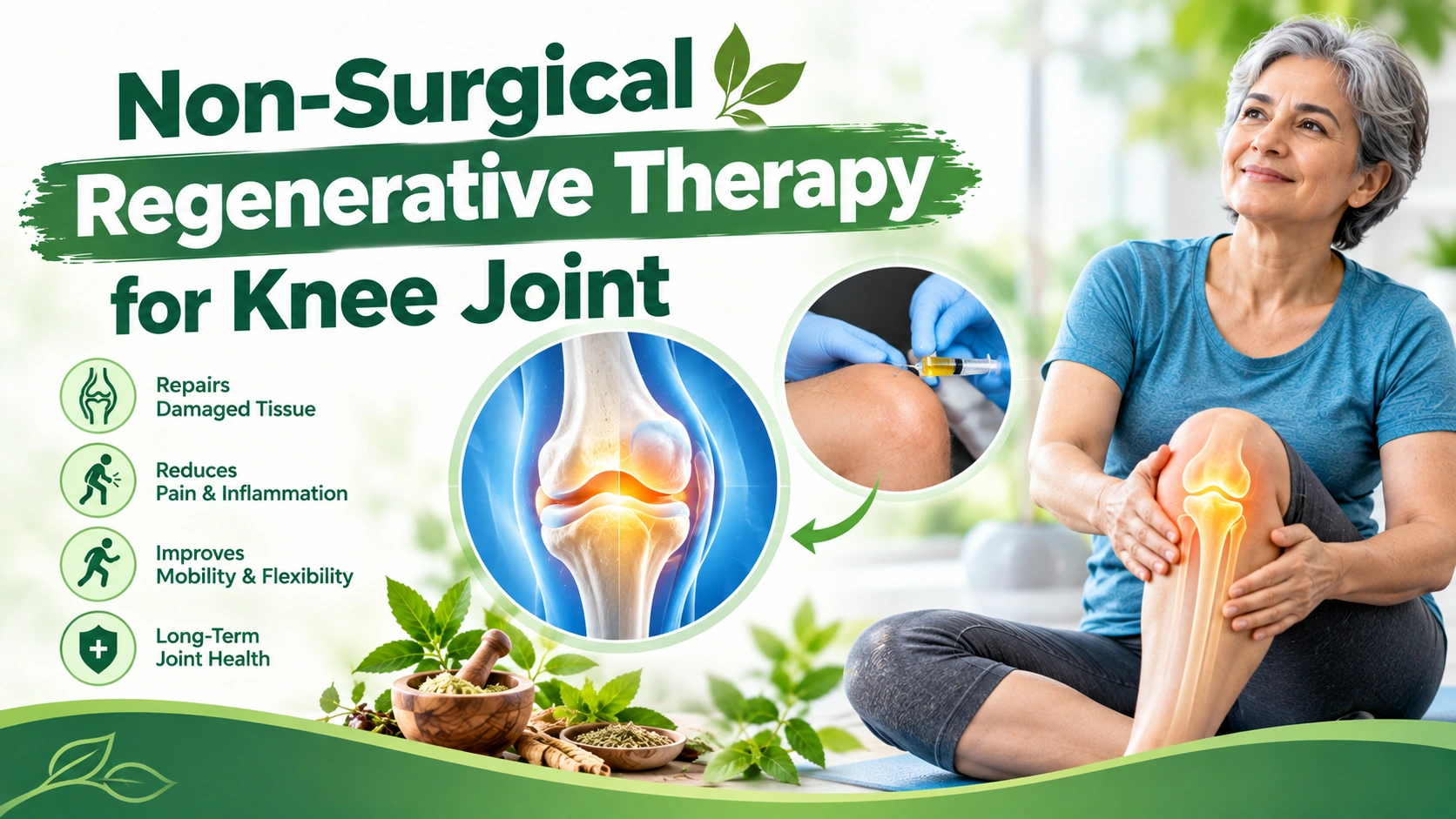
If you just stood up and your joints sounded like a bowl of Rice Krispies having a heated argument, welcome to the club. It’s a prestigious group of people who’ve realized that gravity isn't just a suggestion; it’s a very persistent law. Whether you’re an athlete or just someone who stood up too fast after a Netflix marathon, knee pain can make you feel like your "best by" date was somewhere in the late nineties.
But before you resign yourself to a life of sitting perfectly still and shouting at clouds, let’s talk about Ayurvedic treatment for knee pain. This isn't just about smelling like a spice rack (though that is a definite side effect); it’s a 5,000-year-old system of Ayurvedic medicine designed to stop your body from feeling like a collection of rusty hinges. Many people turn to Ayurveda for knee pain relief because it focuses on addressing the root cause rather than simply masking discomfort.
Wait, Why Do My Knees Hate Me? The Ayurvedic Perspective on Knee Pain
In the world of Ayurveda, everything boils down to three "doshas" or energies: Vata, Pitta, and Kapha. Think of them as the managers of your body’s internal departments. When it comes to joint pain and knee pain, the main culprit is usually Vata.
Vata is the energy of movement, air, and space. When it’s out of whack, it becomes dry, cold, and rough. Imagine your knee joint is a well-oiled hinge. Excess Vata is like someone coming along, sucking out all the oil, and throwing in a handful of sand for fun. This leads to that "bone-on-bone" feeling, stiffness, and the aforementioned snapping, crackling, and popping.
There is also the "Amavata" version, which involves Ama (toxic sludge from poor digestion). This is when your knees aren't just dry; they are inflamed and swollen, like they’ve decided to throw an angry, puffy party and didn't invite the rest of your body. In Ayurveda, managing Ama is considered essential for natural knee pain relief and healthier joints.
Step 1: Oil Up Like a Rusty Tin Man (Abhyanga and Janu Basti)
The first rule of Ayurvedic knee pain treatment is: oil is your best friend. Since Vata is dry, we fight it with its opposite; moisture.
- Janu Basti: The Oil Dam: This is the gold standard in Ayurvedic therapy for knee pain. A therapist builds a little dam out of dough around your knee and fills it with warm, medicated herbal oil. You just lie there while your knee literally marinates. You’ll look like you have a giant bagel stuck to your leg, but the relief is so good you won't care.
- Self-Abhyanga: If you can’t get to a clinic, warm up some sesame oil; not "burn your skin off" hot, just "pleasant bath" warm. Rub it into your knees in circular motions. Your knees are sensitive souls; don't treat them like you're trying to scrub a stain out of a carpet. Regular oil massage is one of the simplest home remedies for knee pain recommended in Ayurveda.
Step 2: You Are What You Digest (The Anti-Vata Diet)
You might think, "What does my stomach have to do with my knees?" In Ayurveda, everything. If your digestion is weak, you produce toxins that love to settle in your joints because joints are basically the "suburbs" of your body where toxins go to retire. Supporting digestion is an important part of Ayurvedic treatment for arthritis and knee pain.
- Eat Warm, Cooked Foods: Vata is cold. If you eat a giant raw salad in the middle of winter, your knees will personally send you a complaint letter. Stick to soups, stews, and kitchari.
- Embrace the Healthy Fats: Ghee (clarified butter) is the superstar here. It lubricates the body from the inside out. Think of it as internal WD-40 for better joint health.
- Avoid the "Gas-Producers": Beans, cabbage, and broccoli are great, but they can be very "airy." If you’re going to eat them, cook them with plenty of ginger and cumin to keep the gas (Vata) at bay.
Step 3: Spice Up Your Life (Literally)
Your spice cabinet is actually a pharmacy in disguise. You don't need a lab coat; you just need a spoon. Many of these herbs are commonly used in Ayurvedic remedies for knee pain.
- Turmeric: The MVP. It contains curcumin, which is a powerhouse for fighting inflammation. Mix it with a little black pepper (to help absorption) and some fat. It remains one of the most trusted herbs for knee pain.
- Ginger: It’s a natural painkiller. Drink ginger tea, or make a ginger paste and apply it to your knee. Warning: it might tingle. That’s just the ginger telling the pain to move out.
- Boswellia (Shallaki): This is Indian frankincense. It’s widely studied for its ability to reduce joint swelling. It’s basically the Ayurvedic version of "I can finally walk down the stairs without crying." It is often recommended in Ayurvedic medicine for joint pain.
Step 4: The Magic of Pinda Sweda (The Herbal Bolus Massage)
This Ayurvedic therapy sounds fancy, but it basically involves being hit—gently—with warm herbal pouches. Therapists take herbs, grains, or powders, tie them up in a cloth, dip them in warm oil, and massage your joints. The combination of heat and herbs helps to draw out toxins, improve circulation, and reduce stiffness. It’s particularly great if your knees feel heavy and "stuck," making it a popular Ayurvedic treatment for chronic knee pain.
Step 5: Gentle Movement (Yoga, Not Contortionism)
When your knees hurt, the last thing you want to do is move. But Vata thrives on stagnation. If you stop moving, you get stiffer. The trick is to move like a graceful swan, not a caffeinated squirrel. Gentle movement is an important part of natural treatment for knee pain.
- Tadasana (Mountain Pose): Standing still with proper alignment takes the pressure off your knees.
- Virasana (Hero Pose): Be careful with this one. Use blocks or pillows. It stretches the thighs and improves circulation to the joints.
- Avoid High Impact: Now is not the time to take up competitive pogo-sticking. Stick to walking, swimming, or gentle yoga to support knee joint health.
Step 6: Stress Management (Because Your Knees Are Listening)
Vata is also linked to the nervous system. If you are stressed, anxious, or running on three hours of sleep and five espressos, your Vata will skyrocket, and your knees will pay the price. Simple deep breathing and actual sleep are non-negotiable. Your body repairs itself at night; if you skip sleep, you’re basically telling your knees, "Good luck with that inflammation, I’ve got emails to check." Managing stress is another overlooked aspect of Ayurvedic knee pain relief.
The Golden Rules for Ayurvedic Knee Care
To make this easy to remember, here is a quick cheat sheet for your creaky joints:
- Keep them warm: Cold is the enemy of Vata. If it’s chilly, wear layers.
- Hydrate correctly: Drink warm water throughout the day. Ice water is a "no-go" for joint pain.
- Listen to the "Pop": A little clicking is usually just air bubbles. If it’s accompanied by sharp pain, that’s your body’s way of saying, "Stop doing that immediately."
- Consistency is key: You can’t eat one bowl of kitchari and expect to do a backflip. Ayurvedic treatment for knee pain is a slow-and-steady approach that delivers the best results with regular practice.
A Final Word of Wisdom
Ayurveda for knee pain is incredible, but it isn't magic. If your knee is pointing in a direction a knee should never point, please go see a doctor. This system works best as a long-term lifestyle shift for managing chronic wear and tear, osteoarthritis, and everyday joint pain.
Treating your knees with Ayurvedic treatment for knee pain is basically about being kind to yourself. It’s about slowing down, warming up, and realizing that your body isn't an old car that needs a part replaced; it’s a living system that needs a little bit of oil, some good spices, and a lot of patience. When combined with professional medical guidance, Ayurvedic remedies for knee pain can support healthier joints, improve mobility, and help you enjoy lasting natural knee pain relief.
FAQs
1. What is the best Ayurvedic treatment for knee pain?
Janu Basti, herbal oils, yoga, and dietary.
2. Can Ayurveda help with chronic knee pain?
Yes, Ayurveda for chronic knee pain may help reduce stiffness, improve mobility, and support long-term joint health.
3. Which Ayurvedic herbs are good for knee pain?
Turmeric, Boswellia (Shallaki), and ginger are commonly used to support natural knee pain relief.
Disclaimer: This article is for informational purposes only and is not a substitute for professional medical advice, diagnosis, or treatment. Always consult a qualified healthcare provider or Ayurvedic practitioner before starting any new treatment for knee pain.