Is It Actually Possible?
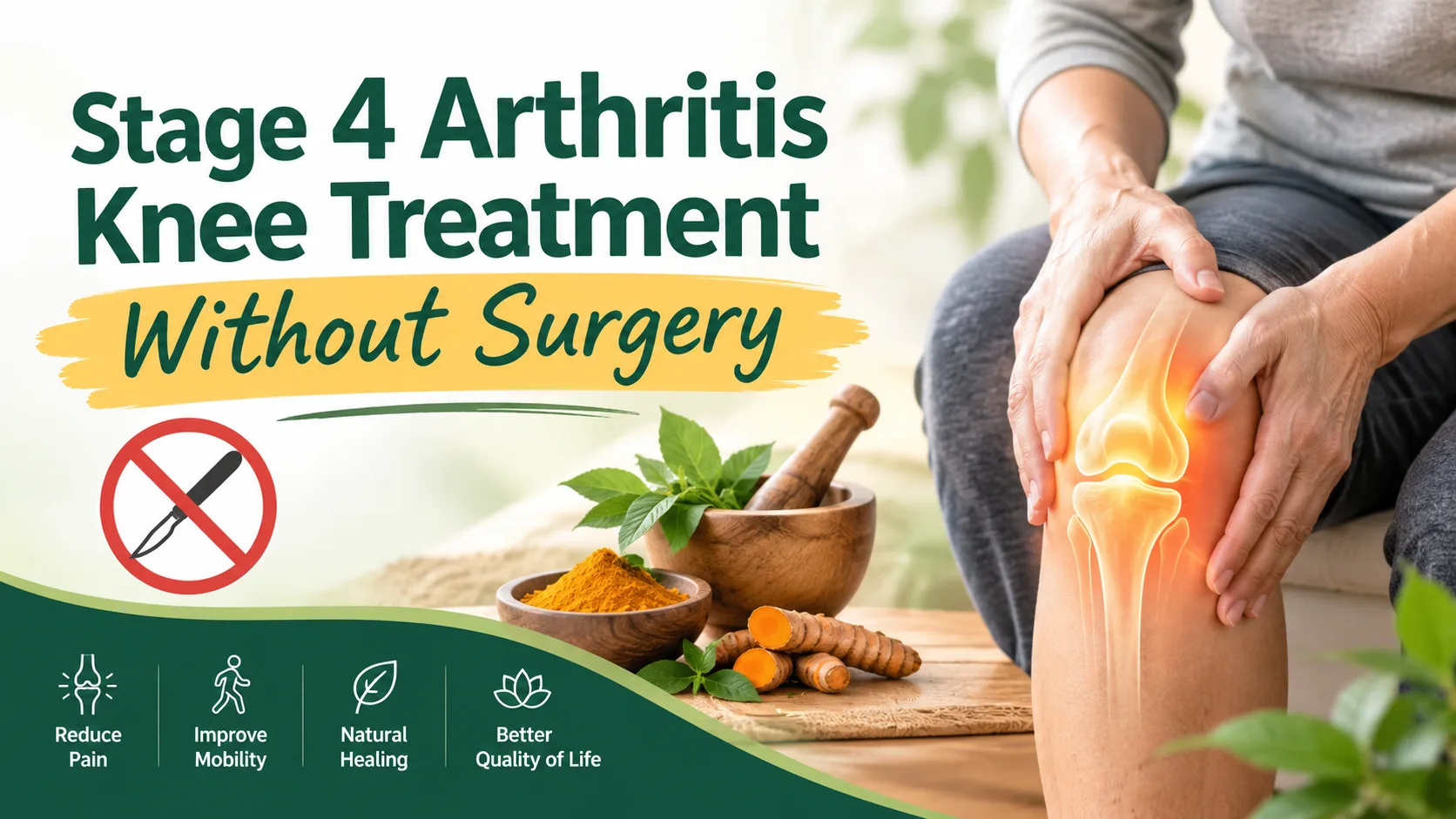
Yes, stage 4 arthritis knee treatment without surgery is possible for many people, at least for a good long while. Surgery is not the only door in the hallway; it's just the one doctors mention first because it's the loudest.
Let's talk about what that actually looks like, minus the scary hospital brochure language.
Wait, What Even Is Stage 4 Knee Arthritis?
Picture the cartilage in your knee as the memory foam between your bones. In stage 4 knee osteoarthritis, that foam has basically given up and gone home. The femur and tibia are now rubbing against each other like two unoiled door hinges, which explains the grinding, the swelling, and the "why does standing up feel like a personality test" pain.
It's real, it's uncomfortable, and it's not something you can stretch your way out of. But, and this is the important part, non-surgical knee arthritis treatment isn't about reversing the damage. It's about calming the joint down, protecting what cartilage is left, and getting you moving with less pain. Think damage control, not miracle cure.
The Non-Surgical Toolkit (No Scalpels Required)
Here's the honest menu of options that actually have research behind them, not just a catchy Instagram ad.
- Weight management – This is the unglamorous MVP. Every extra pound puts roughly 4 pounds of extra pressure on your knees when you walk. The landmark IDEA trial (Messier et al., published in JAMA, 2013) followed 454 overweight and obese adults with knee osteoarthritis and found that people who combined diet-based weight loss with exercise had significantly less pain, better function, and lower knee joint loads than those who exercised alone. Translation: your knees genuinely thank you for every kilogram you lose.
- Physical therapy and targeted exercise – Strengthening the quads and hamstrings around the knee acts like a natural knee brace. A 2025 meta-analysis of nearly 10,000 patients found that exercise, hydrotherapy, and knee braces were among the most effective non-drug therapies for knee osteoarthritis, precisely because they fix the mechanics without any medication side effects.
- Bracing and assistive devices – Unloader braces shift weight away from the most damaged part of the joint. Not glamorous, but genuinely effective, especially if your arthritis is worse on one side.
- Injections (cortisone, gel/viscosupplementation, PRP) – Cortisone calms inflammation short-term. Viscosupplementation (the "gel shots") tries to replace lost joint lubrication and can provide relief that lasts months. Platelet-rich plasma (PRP), made from your own blood, has shown promising results for reducing inflammation and pain, especially when combined with other conservative care.
- Regenerative medicine (PRP, BMAC, amniotic-based therapies) – These are newer and still developing, and results tend to be strongest in mild-to-moderate arthritis, but many patients with severe, stage 4 disease still report meaningful relief and delayed need for surgery when combined with the basics above.
- Anti-inflammatory diet and lifestyle tweaks – Turmeric, green tea, omega-3s; none of these will regrow cartilage, but reducing overall inflammation genuinely helps some people feel less "creaky" day to day.
- Acupuncture and manual therapies – Not magic, but for some patients they're a useful piece of the pain-management puzzle, particularly alongside physical therapy.
A (Slightly Cheeky) Comparison Table
| Treatment | What It Actually Does | Pain Relief Style | The Catch |
| Weight loss + exercise | Reduces mechanical stress on the knee | Slow-burn, steady | Requires actual consistency (ugh) |
| Cortisone injection | Dials down inflammation fast | Quick, short-lived | Wears off in weeks to months |
| Viscosupplementation (gel shots) | Adds lubrication to the joint | Moderate, lasts months | Not everyone responds |
| PRP / regenerative injections | Uses your own healing factors | Gradual, builds over weeks | Pricier, insurance is stingy |
| Knee brace | Redistributes load away from damage | Immediate, mechanical | You will look like you're prepping for battle |
| Total knee replacement (for comparison) | Replaces the joint entirely | Most complete relief | Surgery, recovery, no take-backs |
When Non-Surgical Really Isn't Enough Anymore
Let's be fair and not oversell this. Knee arthritis treatment without surgery works best when pain is manageable with activity modification, not when it's waking you up at 3 a.m. or you can no longer climb a single stair. Doctors typically start recommending surgery when pain is constant, even at rest, and quality of life has taken a real hit despite trying the conservative route seriously (not just for two weeks before giving up). Even then, many surgeons will say: try everything else first, because a knee replacement is a big commitment with its own recovery marathon.
Key Takeaways
- Stage 4 knee osteoarthritis doesn't automatically mean surgery is your only path forward.
- Weight loss combined with exercise is backed by strong clinical research (hi, IDEA trial) and remains one of the most powerful non-surgical tools.
- Braces, physical therapy, and hydrotherapy address the mechanics of the joint, not just the pain.
- Injections like cortisone, gel shots, and PRP can buy meaningful time and comfort.
- Surgery becomes the more sensible option when pain is constant, function is severely limited, and conservative treatments have genuinely been given a fair shot.
FAQs
Can stage 4 knee arthritis be reversed without surgery?
No, cartilage that's gone doesn't grow back on its own, but symptoms and function can improve a lot with the right non-surgical plan.
How long can you delay knee replacement surgery with stage 4 arthritis?
It varies person to person, but many people manage for years using weight management, exercise, bracing, and injections before surgery becomes necessary.
Are gel injections (viscosupplementation) worth trying for stage 4 knee arthritis?
For many people, yes, they can meaningfully ease pain and improve movement for several months at a time.
Does losing weight really help knee arthritis pain?
Yes, even a modest weight loss noticeably reduces the pressure on your knees and can significantly cut down on pain.
Is walking bad for stage 4 knee arthritis?
Not usually; gentle, consistent movement (with the right support) tends to help far more than sitting still.
Disclaimer
This article is for general informational purposes only and is not a substitute for professional medical advice, diagnosis, or treatment. Knee osteoarthritis varies a lot from person to person. Please consult an orthopedic specialist or your healthcare provider before starting or changing any treatment plan.