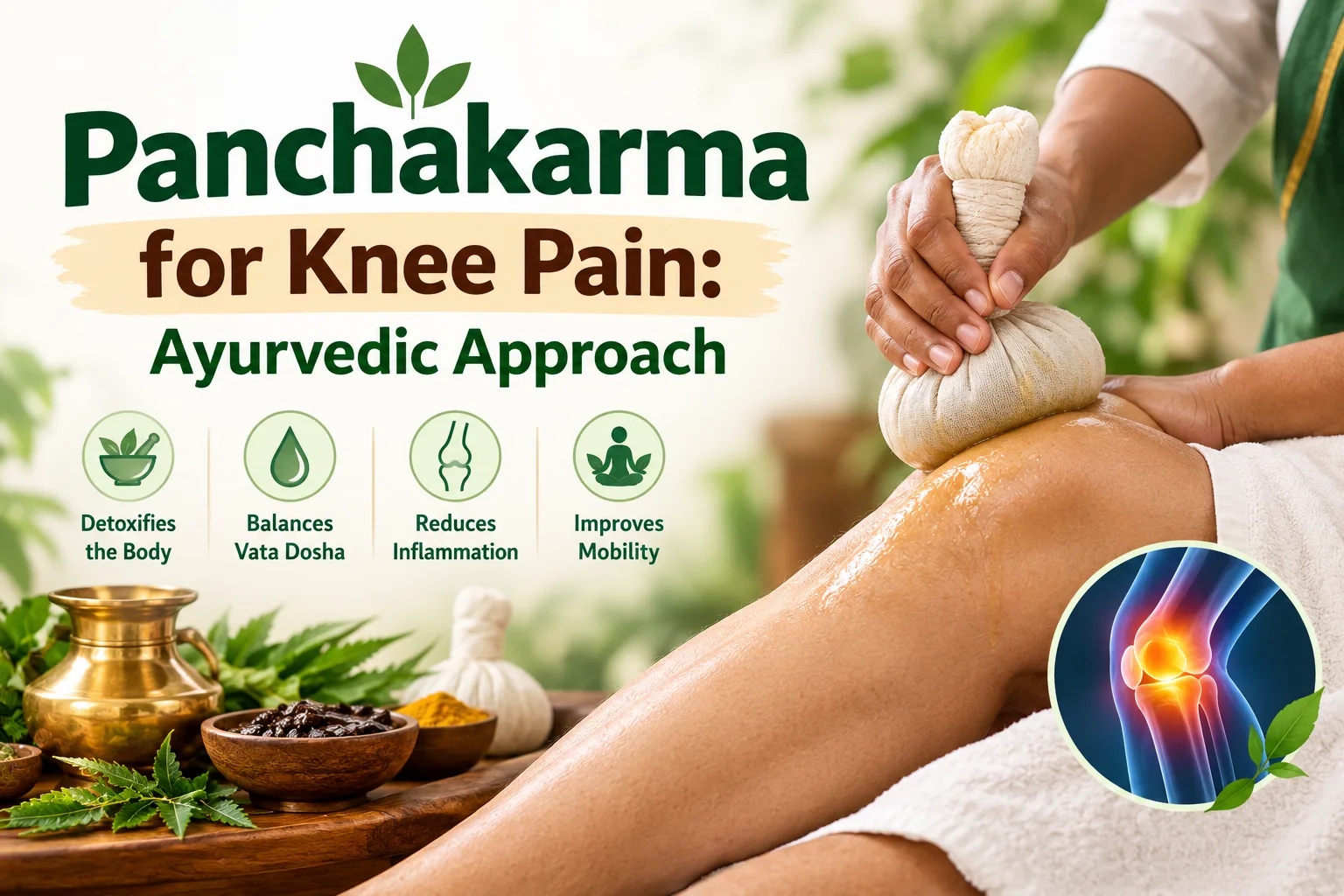
Panchakarma for Knee Pain: Ayurvedic Approach
Does Panchakarma work for knee pain? For most people dealing with regular wear-and-tear (not a fracture, not something that needs a surgeon tomorrow), yes; it genuinely helps. Now let me tell you why, because there's a decent story behind it.
Okay so here's the thing about knee pain; it never really "arrives." It sneaks in. One day you're fine, and then somewhere between your late twenties and forties you catch yourself going "ugh" out loud just from standing up off the sofa. Stairs start feeling personal. You start doing that weird thing where you brace your hand on your thigh before getting up, like you're eighty. If any of this sounds familiar, your knees have basically been leaving you voicemails for years. You just weren't picking up.
Why Knees Betray Us Like This
Ayurveda pins most of this on an aggravated Vata dosha. Vata is basically the "movement and dryness" energy in the body, and when it goes out of whack, it loves to camp out in joints; knees especially, because they carry your entire body weight around all day without complaint. The result is dryness, stiffness, that grinding sound that makes your family go "what WAS that," and eventually real pain.
Funny enough, modern medicine; which usually rolls its eyes at old-school stuff; actually agrees on this one. What Ayurveda calls Vata-driven joint degeneration lines up pretty closely with what doctors call osteoarthritis: cartilage thinning out, joint space shrinking, low-grade inflammation quietly wrecking things behind the scenes. Different vocabulary, same crime scene.
What Panchakarma Actually Does (No, It's Not Just Oil and Vibes)
Panchakarma for knee pain relief isn't one treatment you show up for and leave cured. It's a set of therapies used together, and a good Ayurvedic doctor picks and sequences them based on how bad your knee actually is. A few of the regulars:
- Janu Basti; warm medicated oil pooled right on the knee using a little dough ring, like the knee gets its own private oil bath. Honestly this is the one most people mean when they talk about knee-specific Panchakarma.
- Abhyanga; full body oil massage, not just for the knee, but it helps calm Vata everywhere and improves circulation.
- Swedana; steam therapy to loosen up stiffness. Slightly like being gently steamed, and weirdly relaxing once you get past the initial "wait, what's happening" moment.
- Basti; medicated enemas, yes really, and before you make a face; this is genuinely considered one of the strongest Vata-balancing treatments in classical texts.
- Virechana; a cleansing therapy sometimes used first to clear out inflammatory buildup (called Ama) before local treatment even starts.
None of this is a one-time spa visit. It's a proper course, and it only works if you actually stick with it, which, let's be honest, is the hard part for most of us.
📩 Ask a Kidney Expert (Free 10-Min Consultation)
But Does Any of This Have Science Behind It?
Good question, and you should ask it; nobody should just take a blog's word for anything. There's actual research here, published in places like AYU and the Journal of Ayurveda and Integrative Medicine, looking at Panchakarma protocols; Janu Basti and Basti therapies specifically; for knee osteoarthritis, which classical texts call Sandhivata. Broadly, these studies have reported real improvement in pain levels, stiffness, and how far people could bend or move the joint after completing a structured course. A few have also stacked oil-based local therapies up against standard physiotherapy and found the results held up pretty well, sometimes doing better on pain and stiffness scores over a few weeks.
Now, is anyone claiming Panchakarma regrows cartilage like a starfish regrowing a limb? No, and be suspicious of anyone who tells you that. When people ask about knee cartilage regeneration in Ayurveda, what's actually being researched is whether certain herbs and therapies support the joint tissue that's still there and slow down further damage. It's maintenance work, not a magic rebuild.
Panchakarma vs Painkillers vs Surgery, Honestly Compared
Option
What It Actually Does
Where It Falls Short
Painkillers
Turns the pain volume down, fast
Doesn't touch the actual problem; your knee's still quietly falling apart underneath
Knee Replacement Surgery
Swaps the joint out entirely
Big surgery, real downtime, not exactly something you casually agree to on a Tuesday
Panchakarma
Deals with the dryness, inflammation, and Vata imbalance at the root
Needs patience and follow-through; it's not an overnight fix, more of a slow burn
If someone's actively hunting for knee replacement alternatives in Ayurveda, this is usually the point where Panchakarma comes up; not sold as a miracle, but as a legitimate route worth trying, particularly if you're still in early or moderate stages and not desperate for a surgical fix yet.
So What's the "Best Medicine" Then?
People keep asking about the best medicine for knee pain in Ayurveda as if there's one bottle that solves it all. There isn't, unfortunately. Ayurveda usually pairs internal formulations; things like Ashwagandha, certain Guggulu-based mixes, Rasna compounds; with external therapy like Janu Basti. It's less "pop this pill" and more "fix the whole system around the joint," because treating one part while ignoring the rest doesn't really hold up long-term.
This is also roughly where places running proper, sequenced Karma Ayurveda for Panchakarma protocols matter; doing the therapies in the right order, at the right intensity, consistently, tends to matter just as much as which specific treatments get used. Doing one oil massage and expecting your knee to throw you a thank-you party isn't really how this works.
Key Takeaways
- Knee pain, in Ayurvedic terms, mostly comes down to aggravated Vata settling into the joint
- Ayurvedic treatment for knee pain usually pairs Panchakarma therapies with internal herbal medicine, not one or the other
- Janu Basti is the most commonly used, and most researched, local therapy for the knee
- Published studies do show measurable pain and stiffness improvement after structured Panchakarma courses
- Results build up gradually; this isn't a same-day fix
- Worth exploring before jumping straight to surgery, especially in early or moderate cases
FAQs
Is Panchakarma effective for knee pain?
For most people with early-to-moderate knee wear, yes; especially with Janu Basti, pain and stiffness genuinely tend to ease over the course of treatment.
How many sessions of Panchakarma are needed for knee pain?
It really depends on the person, but most structured plans run somewhere between 7 and 21 days.
Can Panchakarma regenerate knee cartilage completely?
Not fully; it's more about supporting what's left and slowing further wear than growing brand-new cartilage.
Is Panchakarma a good alternative to knee replacement surgery?
For milder to moderate cases, plenty of people try it first, though badly damaged joints may still need a surgeon's opinion eventually.
Does Janu Basti hurt?
Not even a little; it's warm oil sitting on your knee, closer to a cozy nap than a medical procedure.
Disclaimer
This blog is meant for general information only, not medical advice. Knee pain can have all sorts of causes, so please talk to a qualified Ayurvedic physician or doctor before starting any treatment; especially if there's existing damage or a condition already being managed.