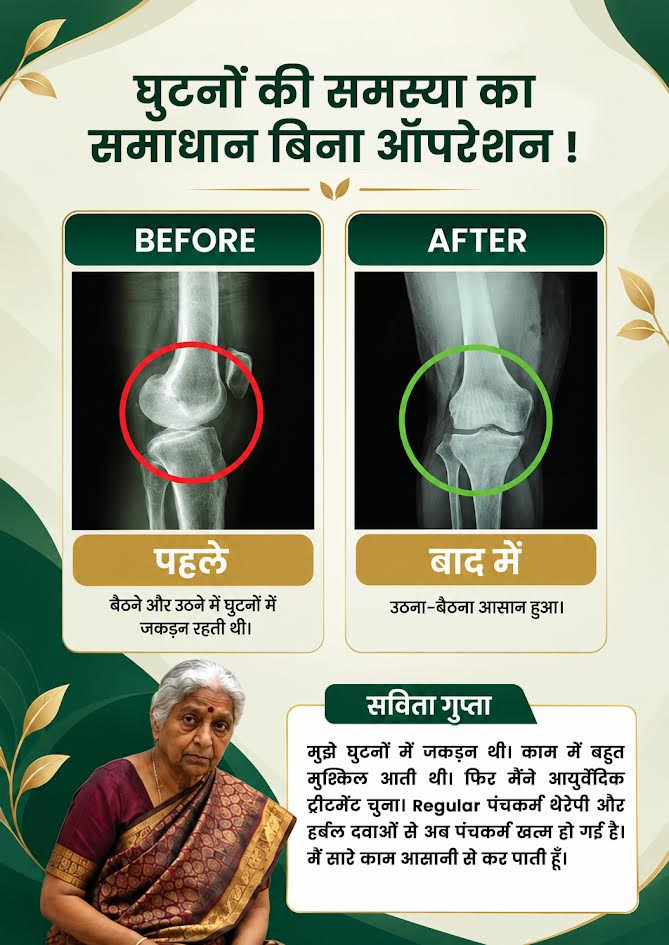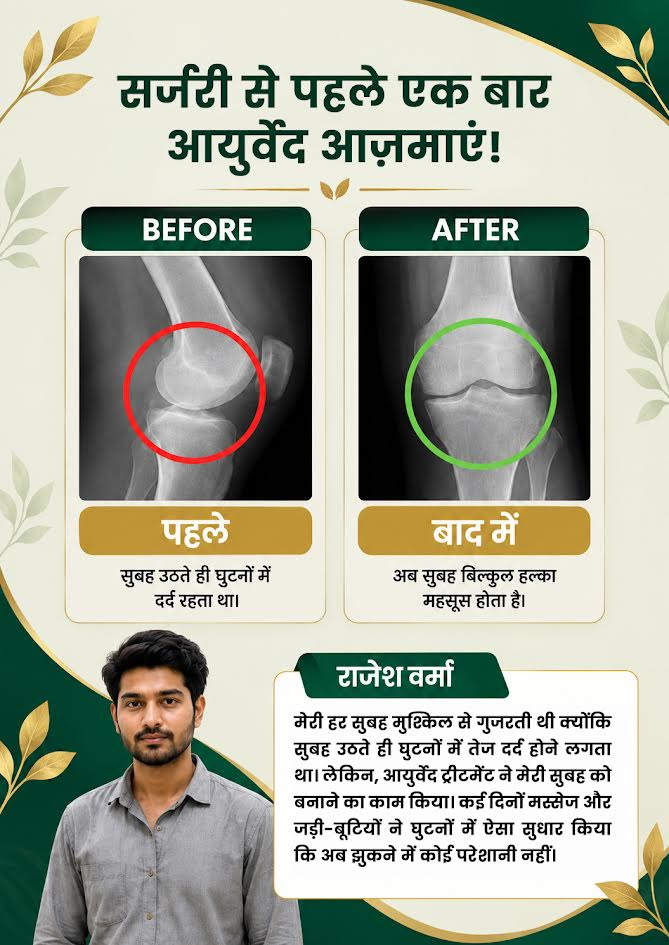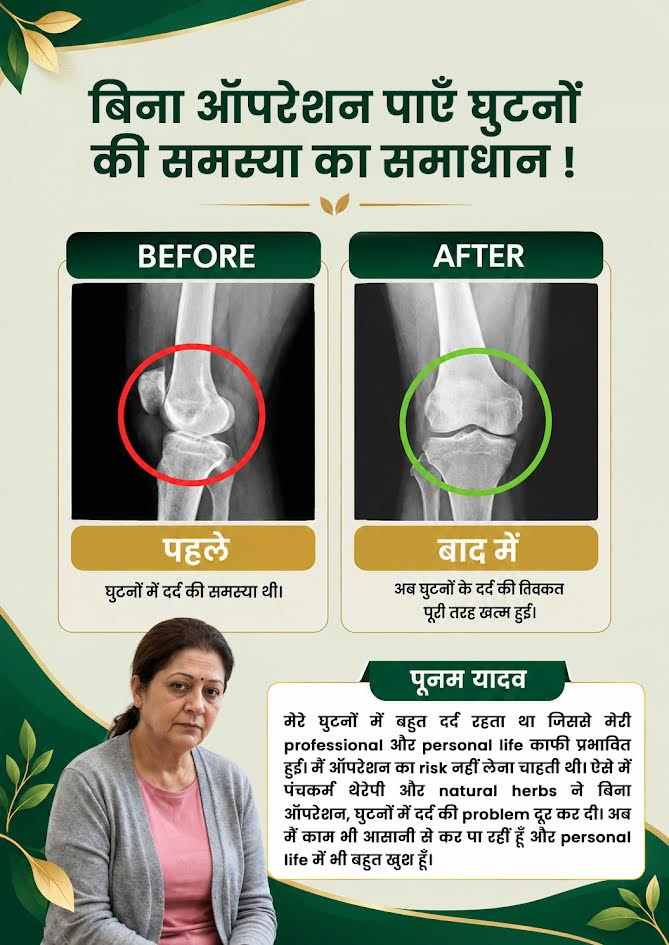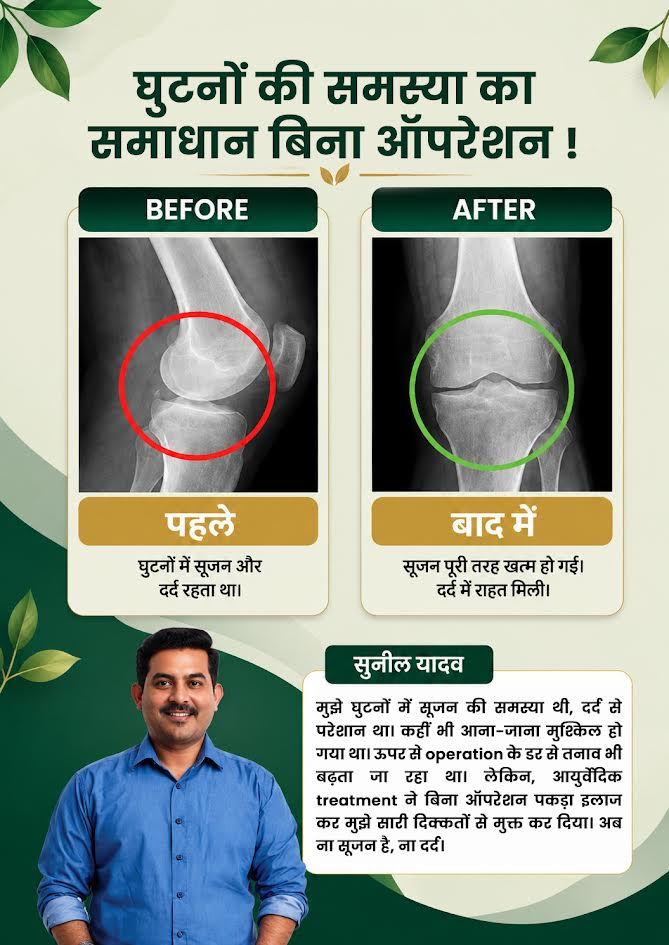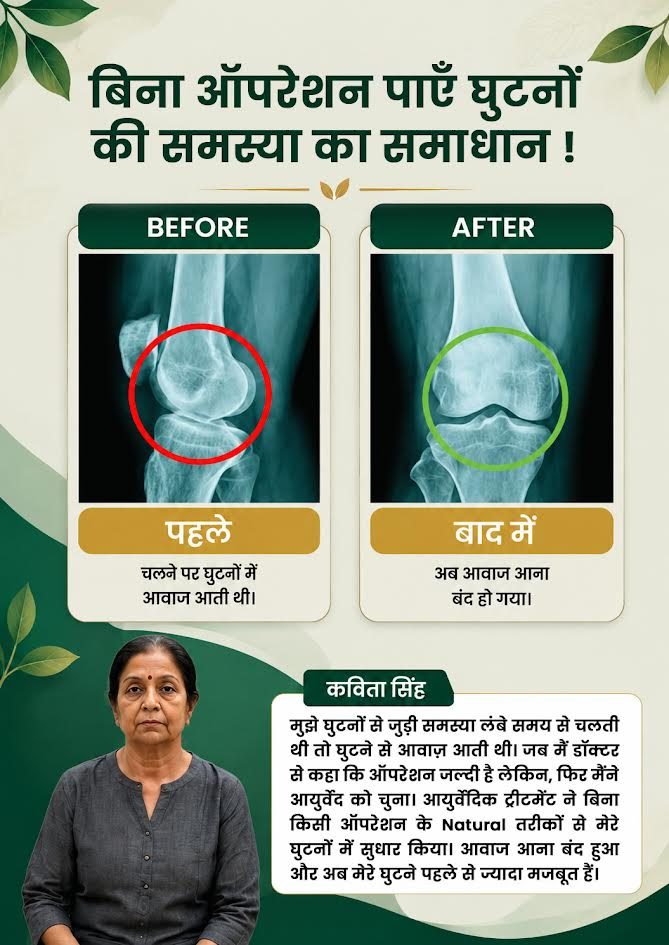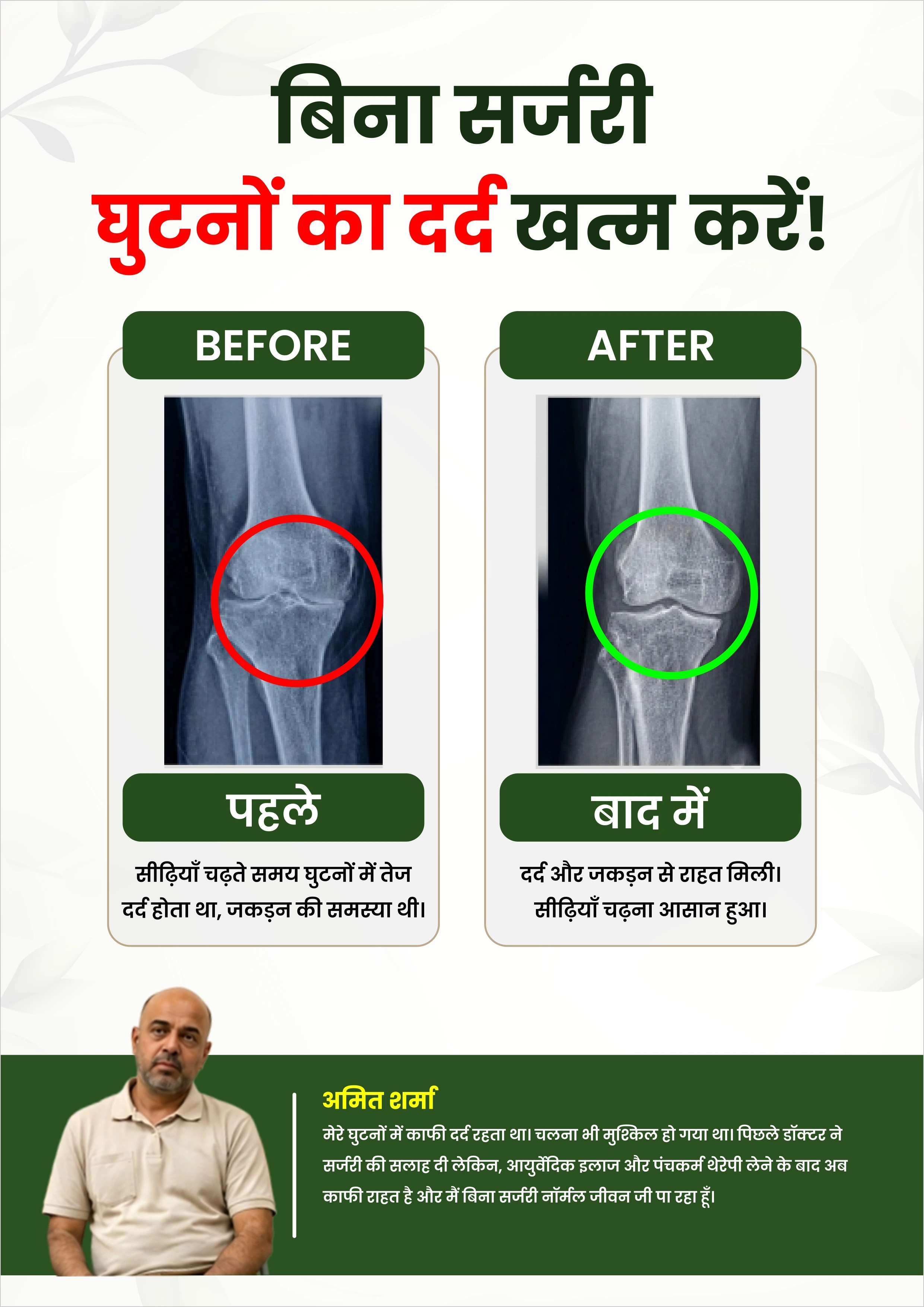
If your knees crack like bubble wrap every time you sit down, and standing back up feels like a small workout on its own, surgery isn't the only road left. A lot of people searching for knee pain treatment without surgery near me are surprised to learn how much relief comes from slower, root-cause approaches; Ayurveda being one of the oldest and most tested of them, long before anyone talks about a scalpel.
Why Your Knees Keep Complaining
Knees put up with a lot. Chasing kids around the house, sitting hunched at a desk for nine hours, then deciding it's a great idea to run a 10K with zero training; it all adds up, and the cartilage is the one paying the bill.
Modern medicine will tell you the cushioning between your bones is simply wearing down. Ayurveda frames it a little differently: it's an imbalance in Vata dosha, the energy tied to air and movement. Too much Vata and things dry out; the Kapha cushioning that's supposed to keep your joints lubricated starts to thin, and that's when you get the stiffness, the clicking, the ache that shows up out of nowhere.
Either way you look at it, the fix doesn't have to start in an operating room.
📩 Ask a Kidney Expert (Free 10-Min Consultation)
Natural Knee Pain Treatment: Where Old Remedies Actually Hold Up
If you've been Googling knee pain natural treatment or natural treatment for knee pain at 1am like the rest of us, herbal options are worth a real look; not as some vague "try this instead of medicine" gimmick, but because a handful of them have decent research behind actually reducing inflammation, not just numbing it.
The Herbs Worth Knowing About
- Shallaki (Boswellia serrata): Also called Indian Frankincense. It blocks a specific inflammatory enzyme (5-LOX, if you want the technical name), and a review in Complementary Therapies in Medicine found that certain Boswellia formulations noticeably helped with pain, stiffness, and joint function in people with knee osteoarthritis.
- Haridra (Curcumin/Turmeric): Yes, the spice in your curry. It works as a natural COX-2 inhibitor, and meta-analyses in Seminars in Arthritis and Rheumatism found standardized Curcumin extracts held their own against conventional NSAIDs; minus the stomach damage NSAIDs are known for.
- Ashwagandha: Usually talked about for stress, but it also plays a role as a knee joint treatment in Ayurveda, mainly by supporting the muscles around the joint and slowing tissue breakdown.
- Guggulu & Nirgundi: Both good at bringing down swelling and clearing what Ayurveda calls Ama; basically metabolic waste that builds up around the joint.
These four keep showing up on every list of the best herbs for joint pain, and honestly, they're the foundation of most knee pain Ayurvedic treatment at home routines you'll come across.
Conventional Care vs. Ayurvedic Care; How They Actually Differ
Feature | Conventional Pain Management | Ayurvedic Joint Care
Primary Goal | Fast symptom relief | Fixing the root imbalance
Key Ingredients | Synthetic NSAIDs, steroids | Best Ayurvedic herbs for knee health (Boswellia, turmeric)
Cartilage Impact | Covers the pain, doesn't slow the wear | Explores knee cartilage regeneration ayurveda protocols
Side Effects | Stomach issues, strain on organs | Gentle, generally easy on the body
Long Run | Can end up pointing toward surgery anyway | Aims to keep you mobile without it
Things You Can Try From Home
You don't need a fancy wellness clinic to get started; most of this you can do with stuff already in your kitchen.
- Warm Sesame Oil Massage (Abhyanga): Rubbing warm sesame oil into your knees each day helps with circulation and takes the edge off excess Vata.
- Golden Milk: Half a teaspoon of turmeric, a pinch of black pepper (it helps your body absorb the turmeric far better), stirred into warm milk; dairy or almond, whatever you prefer.
- Epsom Salt Soaks: A warm compress with Epsom salt loosens up the tendons around a stiff knee.
Movement Matters More Than People Think
When your knee flares up, resting makes sense for a bit. But staying completely still for too long just makes the stiffness worse; your joints need some movement to keep producing synovial fluid, which is essentially the oil that keeps them running smoothly.
- Janu Sirsasana (Head-to-Knee Pose): Stretches the hamstrings and lower back without loading up the knee.
- Setu Bandhasana (Bridge Pose): Builds up the glutes and quads, which takes pressure off the knees over time.
- Straight Leg Raises: Lie down, lift one leg to about 45 degrees, hold, repeat. Simple, but it builds real quad strength that supports the joint.
What's On Your Plate Matters Too
Inflammation doesn't just come from the joint itself; a lot of it starts with what you're eating.
- Eat more of: warm soups, cooked whole grains, ghee, anti-inflammatory staples like ginger, garlic and turmeric, and cooked greens.
- Cut back on: cold or frozen meals, refined sugar, deep-fried food, and nightshades like tomatoes and eggplant if you notice they set off your stiffness.
When It's Time for Expert Help; Dr. Puneet Dhawan
Home remedies can only take you so far, especially with long-standing, bone-on-bone type pain. That's usually where structured, professional care starts to matter. Dr. Puneet Dhawan, who founded Karma Ayurveda, has spent years working with patients on non-surgical alternatives for chronic joint conditions.
His approach pairs personalized herbal treatment with classical therapies like Janu Basti; a treatment where medicated oil is retained directly over the knee joint, aimed at cutting pain, restoring movement, and keeping people off the operating table where possible. If you're exploring Ayurvedic treatment for knee pain, going through an established practitioner tends to give you a much clearer, more structured path than piecing things together on your own.
The Short Version
- Surgery isn't the only door open to you; a lot of non-invasive care genuinely works on inflammation and joint health.
- The herbs have real research behind them; Boswellia (Shallaki) and Curcumin especially show up in clinical studies, not just tradition.
- Daily habits count: oil massage, the right kind of movement, and eating in a way that doesn't feed inflammation.
- For anything chronic, working with someone who knows what they're doing; like Dr. Puneet Dhawan, helps you land on the best medicine for knee pain in ayurveda for your specific situation, rather than guessing.
Questions People Usually Ask
📩 Ask a Kidney Expert (Free 10-Min Consultation)
Can Ayurveda fully cure knee osteoarthritis?
It's better thought of as management than a cure; it reduces pain, brings down inflammation, improves mobility, and can slow further wear.
How long before I notice a difference?
Most people start noticing less stiffness and pain somewhere around 2 to 4 weeks in, assuming they're consistent with the herbs and lifestyle changes.
Any long-term side effects to worry about?
Genuine, high-quality herbal formulations are usually gentle, especially when you're working with proper Ayurvedic guidance rather than winging it.
Can cartilage actually grow back with Ayurveda?
Fully regenerating lost cartilage isn't realistic to promise. What these therapies can do is support and nourish what's still there and keep the joint better lubricated.
Disclaimer: This is for general information only, not medical advice. Talk to a qualified doctor before starting any new treatment, diet, or health routine for a chronic joint issue.