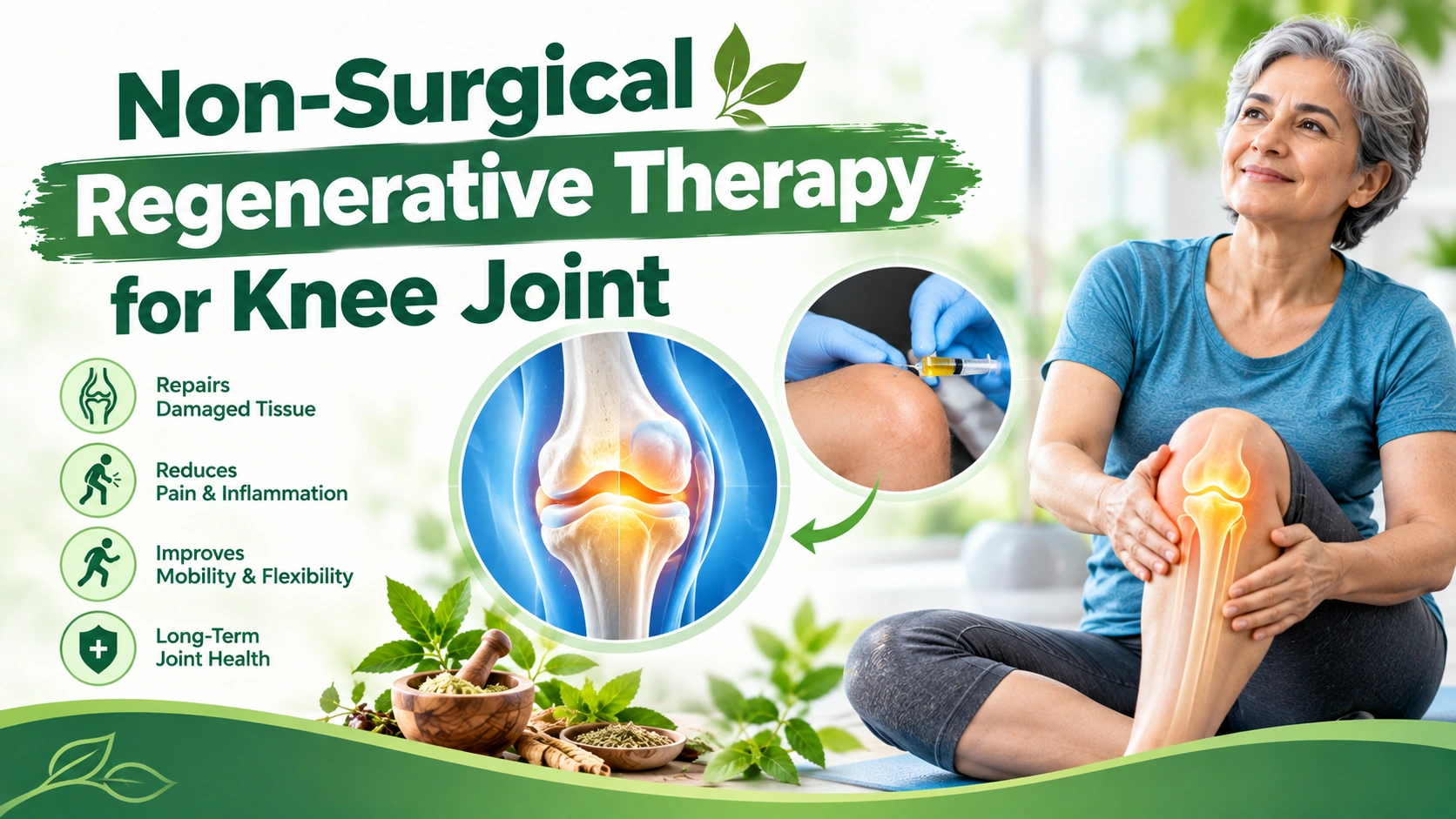
Yes, Ayurveda can genuinely help with knee pain through herbal formulations, therapeutic oil massages (like Janu Basti), diet correction, and lifestyle changes that target inflammation at its root instead of just muting the pain signal. And in a city like Gurgaon, where everyone's knees are quietly filing a complaint against glass office chairs and 45-minute Ola rides to cross 2 kilometres, that's genuinely useful news.
Let's be honest; knee pain doesn't care if you're 25 and "just starting to feel old" or 65 and blaming it on "old age, beta." It shows up uninvited, usually right when you're trying to climb stairs with grocery bags, or attempting that one yoga pose you saw on Instagram. And once it moves in, it doesn't seem to want to leave. You pop a painkiller, it goes quiet for a bit, and then, like that one relative who "just dropped by for five minutes," it's back, staying longer each time.
This is exactly where knee pain ayurveda treatment in Gurgaon enters the chat. Not as some magical overnight fix (please, no one is claiming that), but as a slower, steadier, root-cause-focused approach that a lot of Gurgaon folks are quietly turning to; especially after they've tried the painkiller-ice-pack-repeat cycle one too many times.
Why Is Everyone in Gurgaon Suddenly Talking About Knee Pain?
Gurgaon is basically a glass-and-concrete fitness paradox. On one hand, you've got swanky gyms on every second floor. On the other, most of us spend 9+ hours a day sitting in traffic or hunched over laptops, which is basically a masterclass in how to weaken your knee-supporting muscles.
A few very Gurgaon-specific culprits behind rising knee complaints:
- Long commutes on NH-48 that keep knees bent and inactive for hours
- Sedentary desk jobs in the city's endless IT parks and corporate towers
- High-rise living with lifts that occasionally decide to take a "self-care day," forcing sudden stair climbs
- Poor footwear choices paired with hard pavement walks
- Rising obesity and sedentary lifestyle trends in urban India, which directly load extra stress onto the knee joint
None of this is dramatic on its own. But knees, much like patience during Gurgaon traffic jams, wear thin slowly; and then all at once.
What Ayurveda Actually Says About Knee Pain?
In Ayurveda, knee pain (especially the kind linked to osteoarthritis) is largely seen as a Vata-Kapha imbalance, where Vata dries out joint lubrication, and Kapha adds sluggish, heavy inflammation on top. This condition is traditionally referred to as Sandhivata, and treating it isn't about numbing the joint; it's about restoring balance, nourishing the cartilage, and reducing systemic inflammation.
This is where Ayurvedic knee pain treatment typically works on multiple fronts at once:
- Herbal formulations (like Shallaki/Boswellia and Turmeric-based compounds) to manage inflammation
- Panchakarma therapies to detoxify and reset the body's internal balance
- Janu Basti; a personal favourite of most patients; where warm medicated oil is pooled around the knee using a dough ring, letting the joint literally soak in relief
- Diet corrections, cutting down cold, processed, and Kapha-aggravating foods
- Yoga and gentle movement therapy to rebuild strength without overloading the joint
And no, this isn't just "grandma's home remedy wisdom" (though grandma was usually onto something). There's a growing body of scientific research backing several of these herbal approaches.
Okay, But Does the Science Actually Back This Up?
Fair question, and a good one to ask before trusting anything with your joints. Here's where it gets interesting.
A randomised, double-blind, placebo-controlled trial published in the journal Nutrients (2021) tested a standardised curcumin extract on 101 adults with knee osteoarthritis over 8 weeks. The results showed a statistically significant reduction in knee pain scores compared to placebo, along with improved mobility on walk and stand-up tests. Turmeric, it turns out, isn't just for your dal; it's earning its keep in modern joint research too.
Separately, a study published in Phytotherapy Research (2019) examined Boswellia serrata extract (commonly known as Shallaki in Ayurveda) in 48 patients with knee osteoarthritis over 120 days. It showed significant improvement in physical function, reduced pain and stiffness, and an even greater knee joint gap on radiographic assessment compared to placebo, along with a drop in inflammatory markers in the blood.
And a 2024 multi-centre clinical trial published in Frontiers in Pharmacology found that a standardised Boswellia serrata extract showed measurable improvements in knee osteoarthritis symptoms within just five days of use, across a three-arm placebo-controlled design.
So while Ayurveda has been saying this for centuries, modern clinical research is now quietly nodding along and taking notes.
Ayurveda vs. Painkillers vs. Surgery: A (Slightly Funny) Comparison
Because sometimes a table just explains things better than three more paragraphs:
| Factor | Painkillers | Surgery | Ayurvedic Treatment |
| Speed of relief | Fast, like a Zomato 10-minute delivery | Fast, but with a recovery marathon after | Slow and steady, like a Gurgaon metro line under construction |
| Root cause focus | Not really, just mutes the alarm | Fixes the structure, not always the cause | Yes, aims at inflammation + imbalance |
| Side effects | Possible, especially long-term use | Surgical + anaesthesia risks | Generally gentler, still needs professional guidance |
| Lifestyle involvement | Minimal | Post-op physiotherapy needed | High; diet, oils, movement, all included |
| Commitment required | Pop and forget | One-time but intense | Consistency over weeks/months |
Nobody's saying one option is universally "better"; that genuinely depends on the severity of the knee condition and what a qualified doctor recommends. But for many mild-to-moderate cases, Ayurvedic treatment for knee pain is worth exploring as either a primary approach or alongside conventional care.
What to Actually Expect from an Ayurveda Clinic in Gurgaon
If you're walking into a consultation (mentally preparing yourself like it's a job interview), here's roughly how it goes:
- A detailed Prakriti (body constitution) assessment, because Ayurveda doesn't believe in one-size-fits-all
- Physical examination of the knee joint, gait, and posture
- A personalised plan combining herbs, therapies like Janu Basti, and dietary tweaks
- Follow-up sessions to track progress (spoiler: healing isn't a one-visit miracle)
- Lifestyle guidance; yes, that includes politely telling you to stop sitting cross-legged on the floor for three hours during work calls
Karma Ayurveda and similar established Ayurvedic centres in Gurgaon typically follow this structured, root-cause approach rather than a quick symptom-suppression model, which is honestly the whole point of choosing Ayurveda in the first place.
A Few Simple Things You Can Start Today
Even before booking a consultation, a few small habits genuinely help:
- Avoid sitting cross-legged or squatting for extended periods
- Include warm, cooked foods over cold, raw ones (sorry, salad lovers)
- Try gentle knee-strengthening exercises like straight leg raises
- Use warm sesame oil for a light self-massage around the knee
- Stay consistent with hydration; dry joints love to complain louder
None of these are miracle cures. But consistency, as any Gurgaon gym-goer who's given up on their New Year resolution by February 3rd will tell you, is where the real magic happens.
Key Takeaways
- Knee pain Ayurveda treatment in Gurgaon focuses on root-cause healing through herbs, therapies like Janu Basti, diet, and lifestyle correction
- Knee pain in Ayurveda is largely linked to a Vata-Kapha imbalance, traditionally called Sandhivata
- Clinical studies on curcumin and Boswellia serrata show measurable improvements in knee osteoarthritis pain and function
- Ayurveda works best with consistency; it's a gradual process, not an overnight fix
- Simple daily habits (posture, diet, gentle exercise) can meaningfully support knee health alongside professional treatment
- A qualified Ayurvedic practitioner should always personalise treatment based on individual body constitution and severity
FAQs
Can Ayurveda actually cure knee pain permanently?
Ayurveda can significantly reduce pain and improve joint function for many people, though "permanent cure" depends on the underlying cause and how consistently the treatment and lifestyle changes are followed.
How long does Ayurvedic treatment for knee pain usually take to show results?
Most people start noticing gentle improvement within a few weeks, though full benefits often build up gradually over a couple of months.
Is Janu Basti painful or uncomfortable?
Not at all; it's warm, oily, and honestly one of the more relaxing parts of the whole treatment process.
Can I continue my regular painkillers alongside Ayurvedic treatment?
This should always be discussed with your treating practitioner, since combining treatments needs proper medical guidance rather than guesswork.
Is Ayurvedic knee treatment suitable for severe osteoarthritis or post-injury cases?
It can help manage symptoms even in advanced cases, but severe structural damage may still need conventional medical evaluation alongside Ayurvedic care.
Disclaimer: This blog is written for general informational purposes only and does not constitute medical advice. Ayurvedic treatments should be undertaken under the guidance of a qualified practitioner. Please consult a certified doctor or Ayurvedic specialist before starting any treatment for knee pain or related conditions.