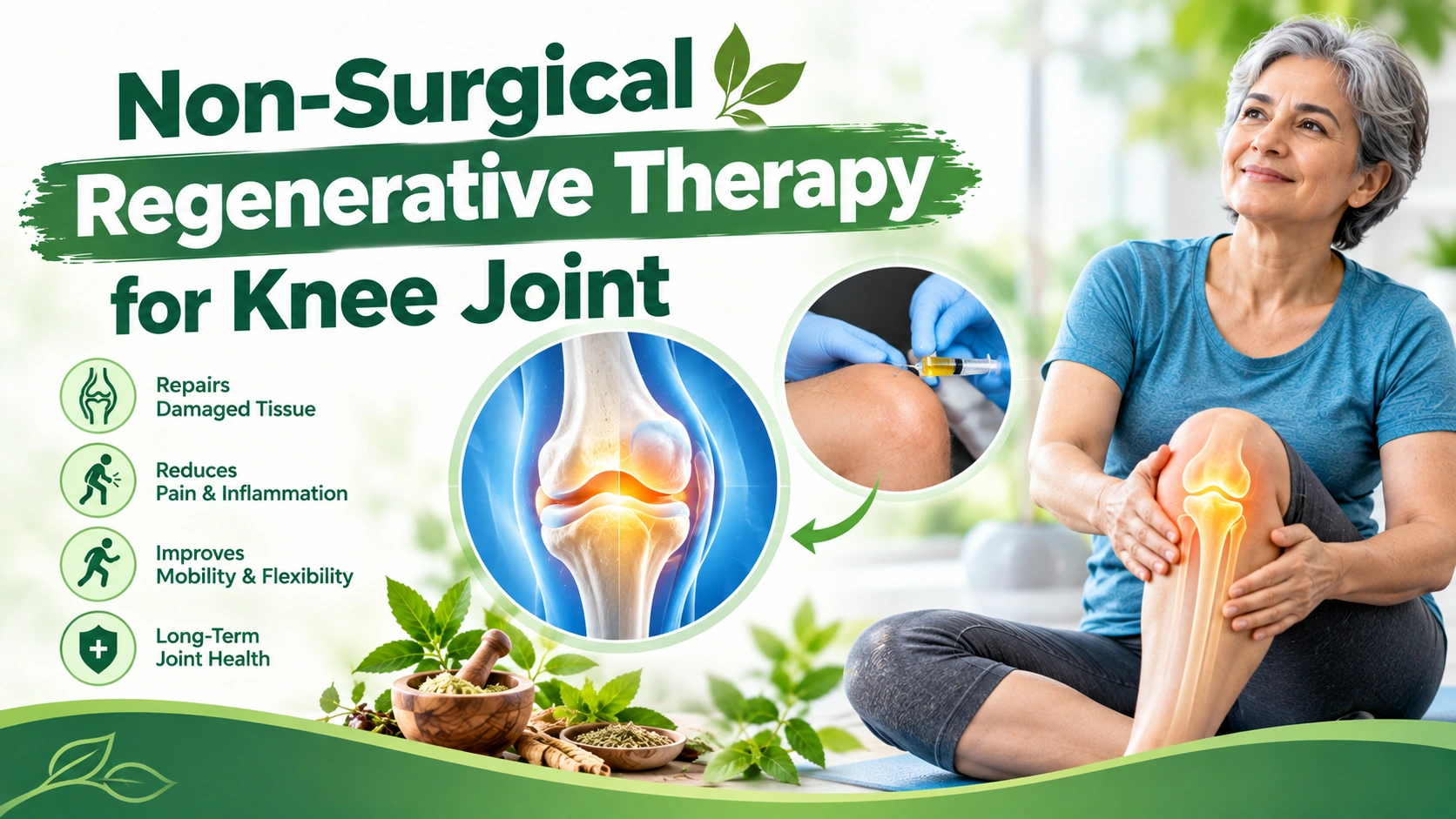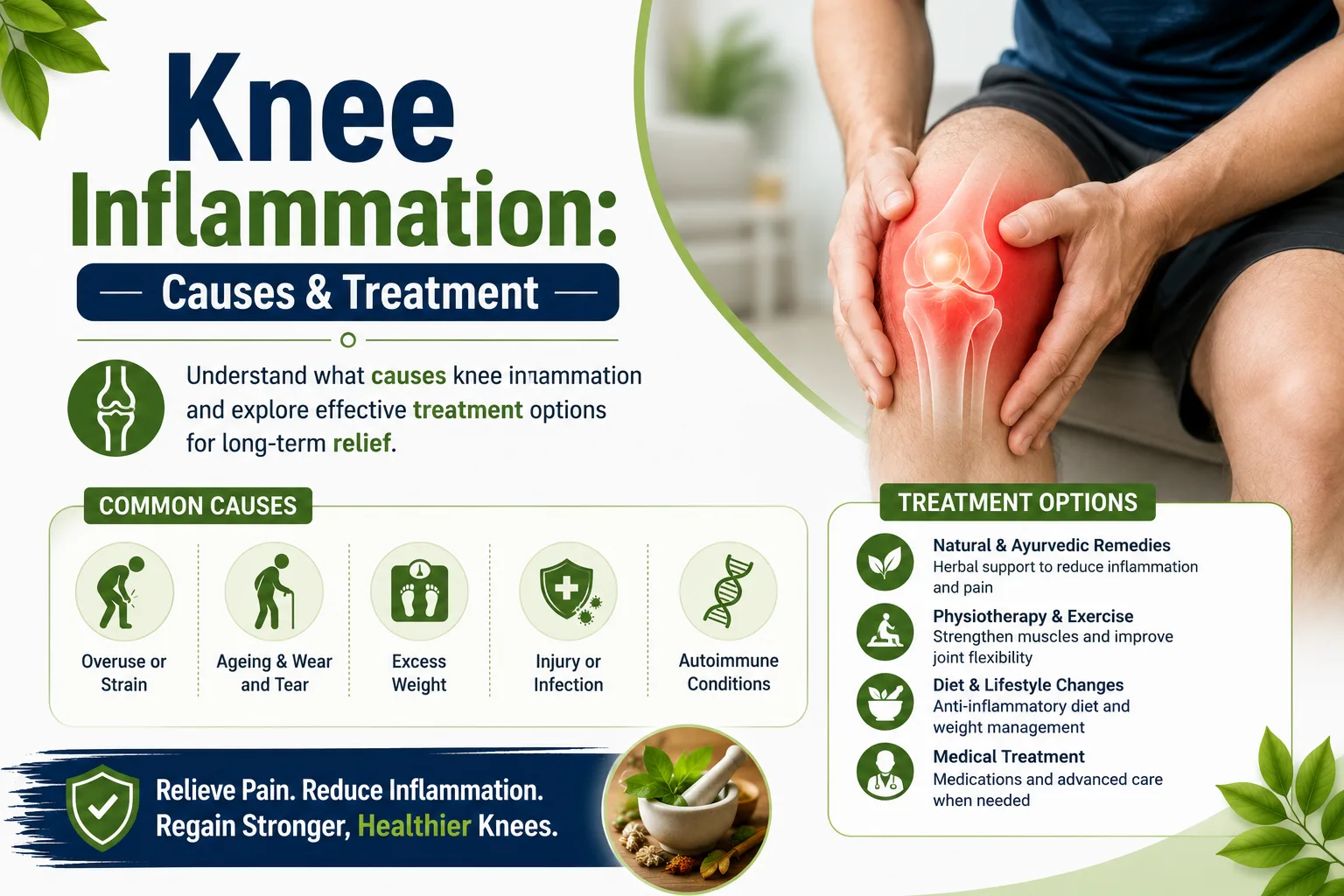
Knee inflammation is basically your joint's way of throwing a small tantrum; it swells up, gets warm, aches, and sometimes refuses to bend properly, usually because of an injury, overuse, or arthritis eating away at the cartilage. And no, it doesn't mean your knee is "done"; most of the time it's fixable, especially if you stop ignoring it the way most of us do.
I say this with love, but knees don't really get the appreciation they deserve. They carry us up stairs, through awkward yoga poses, on that one trek we weren't fit enough for, and through decades of just... standing. And then one day, out of nowhere (or so it feels), they start swelling up and creaking like an old door hinge, and suddenly we're googling things at 11 pm wondering if we need surgery.
Spoiler: you probably don't. Let's actually talk about what's going on in there, why it happens, and how something like Ayurvedic treatment for knee pain fits into the picture, without turning this into a medical textbook nobody asked for.
Okay, But What Is Knee Inflammation, Really?
Picture your knee as a hinge that's held together by cartilage, ligaments, and a slippery fluid doing its best to keep everything moving without friction. When something irritates that setup; an injury, an infection, plain old age; your body sends inflammatory cells over to patch things up. Problem is, sometimes they don't know when to leave. They hang around, cause swelling, redness, stiffness, and suddenly climbing stairs feels like a personal grudge match.
A lot of the time, this chronic swelling traces back to osteoarthritis, where the cartilage cushioning your knee bones thins out over the years. Once that padding wears down, bone starts grinding against bone, which is exactly as uncomfortable as it sounds. Not fun. Would not recommend.
What's Actually Causing It?
There isn't one single villain here; usually it's some combination of the following:
- Osteoarthritis – the "getting older" story nobody wants to hear, but everybody eventually does
- An old injury – a torn ligament or meniscus that never quite healed right
- Overuse – running, squatting, standing all day, repeating the same motion until your knee gets fed up
- Extra weight – every additional kilo adds real pressure on the joint with each step
- Autoimmune trouble – conditions like rheumatoid arthritis, where your immune system mistakes your own joint for the enemy
- Gout – uric acid crystals crashing the party uninvited
- Infection – rare, but it can cause sudden and pretty dramatic swelling
Where Ayurveda Fits Into This?
Ayurveda doesn't treat the knee like an isolated problem sitting there in a vacuum. It looks at the whole system, and usually points to an aggravated Vata dosha; the energy tied to movement- as the root cause. Cold weather, irregular routines, dry skin, aging; all of this can push Vata out of balance, and joints are often where it settles first, showing up as stiffness, dryness, and inflammation. This is really the whole philosophy behind knee joint treatment in Ayurveda: fix the imbalance, and the joint symptoms tend to follow.
What's interesting is that modern research is quietly backing up a lot of what Ayurvedic texts have said for ages. A 2024 trial published in Osteoarthritis and Cartilage Open (Shahid et al.) tested a combination of Boswellia serrata and curcumin over 12 weeks and found real improvement in knee osteoarthritis symptoms. A separate study in Phytotherapy Research ran for 120 days; longer than most trials bother to go; and found that Boswellia serrata extract not only eased pain and stiffness but also brought down hs-CRP, a blood marker doctors use to gauge how "worked up" your inflammation levels are.
The Herbs Everyone Keeps Talking About
If you've ever browsed medicine for knee pain in Ayurveda, you've probably run into these names on repeat:
- Shallaki (Boswellia serrata) – arguably the most studied of the bunch, shown to ease pain and stiffness, with some trials even noting improvement on X-rays
- Guggulu (Commiphora mukul) – traditionally used to bring down swelling and keep the joint lubricated
- Ashwagandha – doesn't work on the knee directly so much as it supports the body's overall resilience, so the joint isn't fighting this battle alone
- Haridra (turmeric/curcumin) – the reigning champion of anti-inflammatory herbs, backed by more clinical trials than probably any other spice in your kitchen. One 2021 trial in Trials found turmeric extract worked about as well as paracetamol for easing knee osteoarthritis pain
- Nirgundi – mostly used topically, in oils and pastes, for local relief
There's also a meta-analysis pulling together 13 randomized trials and over 2,000 patients on Boswellia alone, and it found a genuinely meaningful benefit over placebo. So this isn't just "grandma swears by it"; there's actual data behind it now.
Can Ayurveda Regrow Cartilage? Let's Be Honest
Here's the question everyone's really asking, even if they phrase it differently. And the honest answer is: no treatment, Ayurvedic or otherwise, can fully regrow cartilage once it's significantly worn down. Anyone promising full regeneration is probably selling you something. What knee cartilage regeneration in Ayurveda actually aims for is slowing the damage down, reducing the inflammation that speeds up cartilage loss, and improving how well the joint is nourished. This usually comes through a mix of herbal formulations, medicated oils like Mahanarayan oil, and Panchakarma treatments; Janu Basti being a popular one, where warm medicated oil is pooled right around the knee. It's less "magic cure" and more "steady, patient upkeep."
Ayurveda vs Conventional Treatment (A Slightly Biased Table)
| Ayurvedic Route | Conventional Route | |
| What it targets | The root cause; dosha imbalance, lifestyle, diet | Mostly the symptoms, at least initially |
| Your stomach's opinion | Generally unbothered | NSAIDs can leave it grumbling |
| Speed | Slow, but steady; tortoise energy | Can work fast, especially for acute flare-ups |
| Long haul use | Considered gentler over time | Long-term NSAIDs linked to gut and kidney issues |
| Surgery talk | Rare, unless things are already serious | Sometimes ends up on the table (pun intended) |
If You're Trying to Avoid Surgery Altogether
A lot of people land here because they're specifically Googling knee replacement alternatives in Ayurveda, usually hoping to buy some time or just avoid the operating table entirely. What that typically looks like in practice:
- A herbal plan built around your specific dosha imbalance, not a one-size-fits-all bottle
- Panchakarma detox therapies aimed at bringing down inflammation body-wide, not just locally
- Oil-based therapies: Janu Basti, Abhyanga massage; applied directly to the joint
- Diet tweaks that calm Vata down, so warm, moist, easy-to-digest food over cold, dry, packaged stuff
- Gentle, guided movement to keep the joint from stiffening up further without overloading it
Worth saying plainly: this works best for mild-to-moderate cases. If the joint damage is severe, Ayurveda alone probably isn't enough, and pretending otherwise does nobody any favors. Ideally, Ayurveda and modern medicine aren't competing teams; they work a lot better as coworkers who actually talk to each other.
Small Habits That Genuinely Help
- Keep your weight in a healthy range; your knees feel every extra kilo, literally
- Stay warm, especially when it's cold or damp out, since Vata hates both
- Don't sit frozen in one position for hours; get up, move, stretch
- Add warming, anti-inflammatory food to your plate; turmeric, ghee, soups over cold salads and packaged snacks
- Stick to joint-friendly movement like walking, swimming, or yoga instead of high-impact stuff that jars the knee
Key Takeaways
- Knee inflammation usually comes down to osteoarthritis, old injuries, overuse, extra weight, or autoimmune conditions
- Ayurveda links a lot of knee trouble to aggravated Vata dosha and treats it as a whole-body issue, not just a local one
- Herbs like Boswellia serrata and turmeric actually have clinical trials backing their anti-inflammatory effects
- Ayurvedic care can ease reliance on long-term NSAIDs, which come with their own baggage
- Full cartilage regrowth isn't something any treatment can promise; but slowing the damage down is realistic
- Combining Ayurvedic and conventional care tends to work better than picking a strict side
Wrapping Up
Your knees have quietly clocked in every single day for years without complaint, so a bit of inflammation now isn't some grand betrayal; it's just your body asking you to pay attention for once. Whether that means leaning into Ayurvedic treatment for knee pain, sticking with conventional medicine, or doing a bit of both, the actual goal doesn't change: keep the joint strong, mobile, and as drama-free as possible for as long as you can manage.
FAQs
Does Ayurvedic treatment actually work for knee pain?
Yes, quite a few herbs, especially Boswellia serrata and turmeric, have real clinical trials showing they ease pain and swelling.
Can Ayurveda help me skip knee replacement surgery?
For mild to moderate cases, often yes; but severe joint damage usually still needs proper medical evaluation.
How long before Ayurvedic knee treatment actually shows results?
Most people notice a real difference somewhere between 4 to 12 weeks of sticking with it consistently.
Is it safe to use Ayurvedic medicine for knee pain long-term?
Generally yes, and it tends to be a lot easier on the stomach than long-term NSAID use.
Can Ayurveda actually regrow knee cartilage?
Not fully, but it can slow down further wear and support the joint in the meantime.
Disclaimer: This blog is meant for general information only and isn't a substitute for professional medical advice, diagnosis, or treatment. Everyone's knee pain and its causes are a little different. Please talk to a qualified doctor or Ayurvedic practitioner before starting any treatment.