Here's the Real Deal
Yes, there is a best Ayurvedic hospital for knee and joint pain, and no, it's not run by a hermit in the mountains who only speaks in riddles. Karma Ayurveda has earned its name simply because it tries to fix what's actually wrong with your knee instead of just muting the pain and sending you home.
Okay, real talk for a second. If your knee has ever cracked like someone crushing a packet of chips right when you stood up from a chair, you already know what this article is about. Knee pain isn't just "a knee problem." It quietly ruins everything: your mood, your ability to sit cross-legged at a family function without wincing, your relationship with stairs, your general dignity when you try to get up off the floor in one smooth motion and instead do... whatever that was. So let's actually talk about Ayurvedic treatment for knee pain, what it does, what it doesn't do, and why so many people are choosing it over the "here's a pill, see you in a month" routine.
Why Your Knee Is Basically Filing a Complaint?
Before jumping to solutions, let's give the knee some credit. It's the most overworked, underappreciated joint in your body. It carries your weight all day, absorbs shock every time you jump, run, or misjudge a step, and never once asks for a break. Over the years, thanks to poor posture, extra weight, sitting too much, or just the plain fact that we're all getting older whether we like it or not; the cartilage cushioning that joint starts wearing thin. And that's when osteoarthritis shows up uninvited, bringing stiffness, swelling, and that creaky sound that makes you sound twenty years older than you are.
Modern medicine's usual answer is painkillers, anti-inflammatories, or, if things get bad enough, surgery. Ayurveda takes the slower road. It doesn't just want to shut the pain up; it wants to know why your knee decided to start acting like a door that hasn't been oiled in years.
The Ayurvedic Angle: It's a Vata Thing
In Ayurveda, most joint troubles are traced back to an imbalance in Vata dosha, which is basically in charge of movement in the body. When Vata gets out of hand, it dries out the natural lubrication your joints need; think of your knee running on empty when it should be well-oiled. That's the whole logic behind knee joint treatment in Ayurveda: restore that balance instead of just papering over the pain.
Some of the more commonly used methods here are:
- Panchakarma therapies; detox procedures meant to clear out the toxins (Ama) that keep the inflammation going
- Herbal oil massages (Abhyanga); improves blood flow, loosens up stiffness
- Janu Basti; honestly one of the stranger-looking treatments, where warm medicated oil sits pooled over the knee inside a little dough ring. Looks odd, feels weirdly soothing, and a lot of patients swear by it
- Herbal formulations; often referred to as the best medicine for knee pain in ayurveda, usually built around Shallaki (Boswellia serrata), Guggulu, and Ashwagandha
Does Cartilage Actually Grow Back? Let's Not Oversell This
This is where I want to pump the brakes a little, because the internet loves to exaggerate, and I'd rather just tell you what the research actually says.
There's a clinical study by Kimmatkar and colleagues, published in Phytomedicine back in 2003, that found Boswellia serrata extract meaningfully reduced knee pain and improved function in osteoarthritis patients compared to a placebo group. Interestingly, when patients stopped taking it, their symptoms crept back up; which is a pretty good sign it wasn't just doing nothing.
There's also a study from Kuptniratsaikul and team, published in the Journal of Alternative and Complementary Medicine (2014), that compared curcumin extracts to ibuprofen for knee osteoarthritis and found the pain relief was roughly comparable; but with far fewer stomach-related side effects on the curcumin side. So basically, turmeric's fancier cousin might do a similar job to your usual painkiller, minus the acidity issues.
Now, does any of this mean Ayurveda can regrow an entire worn-out cartilage from scratch? No, and honestly, be wary of anyone who tells you that. When people talk about knee cartilage regeneration ayurveda methods, what's realistically happening is slower degeneration, better lubrication, reduced inflammation, and stronger muscles around the joint doing more of the heavy lifting. It's not a magic reset. It's more like a slow, steady repair job; the kind that actually holds up.
Ask a Knee Expert (Free 10-Min Consultation)
Ayurveda vs. Regular Treatment: A Quick, Honest Comparison
| What we're comparing | Ayurveda's way | The usual medical route |
| The goal | Find and fix the root cause | Get you out of pain, fast |
| Pace | Slow, patient, tortoise energy | Quick fix, quick refill |
| Side effects | Usually mild if done properly | Can upset your stomach, cause dependency |
| Surgery? | Tries hard to avoid it | Sometimes the go-to option |
| End result | Gradual, quieter knees | Quiet knees, louder medical bill |
"Non-Surgical" Isn't Just Something People Say to Sound Nice
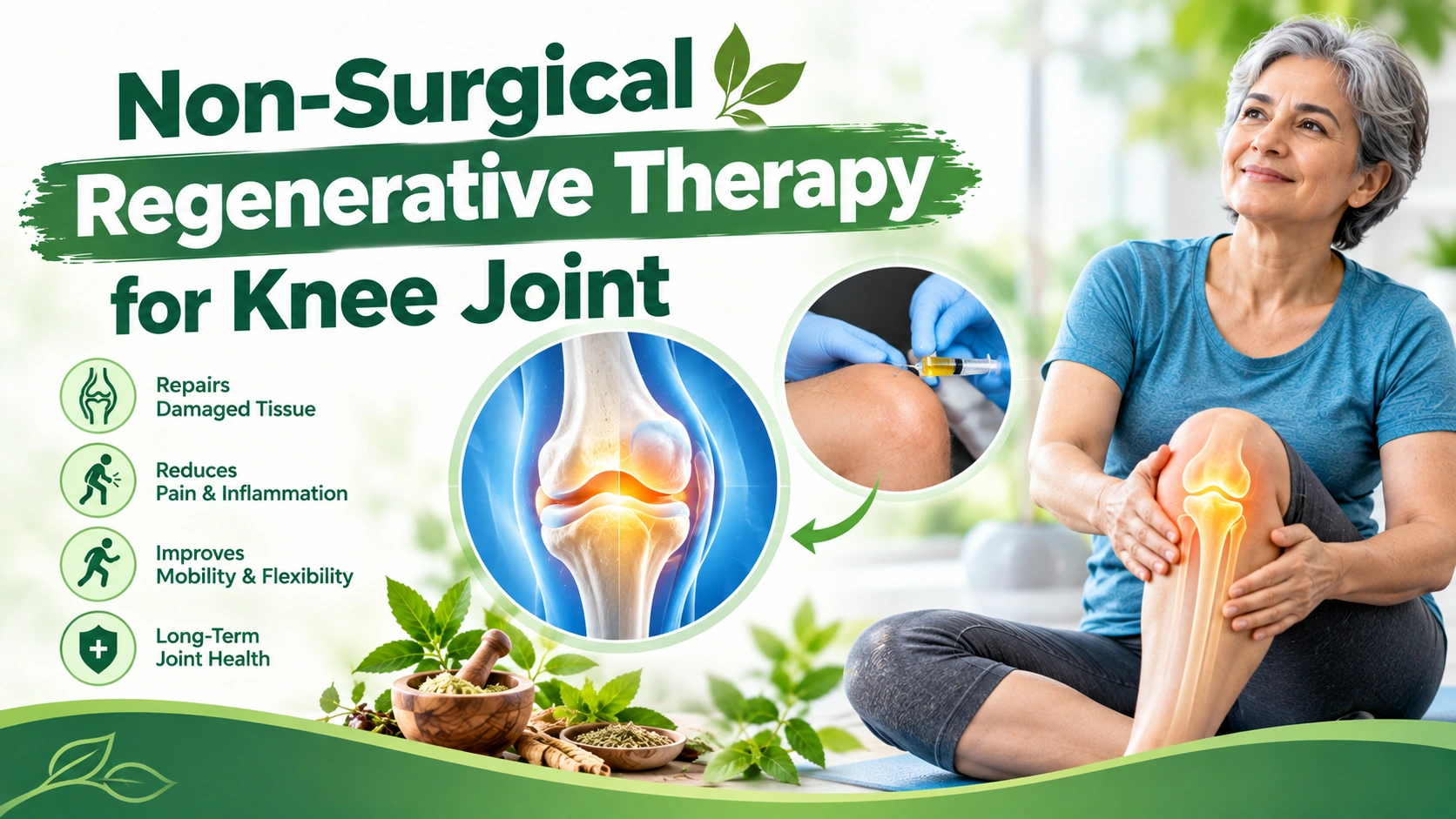
Nobody wakes up excited about knee surgery. It costs a lot, eats up weeks of your life in recovery, and general anesthesia isn't exactly on anyone's bucket list. That's a big part of why non-surgical Ayurvedic therapies for knee pain have picked up so much interest; the whole point is to help people avoid, or at least push back, a knee replacement by working on inflammation, mobility, and joint strength the natural way.
At a place like Karma Ayurveda for knee treatment, the plan usually isn't a copy-paste prescription. It typically involves:
- Herbal medicines picked according to your specific imbalance, not a generic formula
- Diet and lifestyle tweaks (yes, apparently that extra spoon of ghee actually has a purpose)
- Hands-on therapies like Basti and Abhyanga
- Guided movement to build strength around the joint without pushing it too hard
It's less "take this and hope for the best," and more "let's actually figure out what's going on with you specifically."
Key Takeaways
- Knee and joint pain in Ayurveda is mostly tied to a Vata imbalance messing with joint lubrication
- Ayurvedic treatment for knee pain goes after the cause, not just the symptom
- Boswellia serrata and curcumin have actual clinical research backing their anti-inflammatory effects
- Knee cartilage regeneration ayurveda methods realistically slow damage and support the joint; they don't "regrow" cartilage overnight
- Non-surgical approaches can genuinely help, especially if you catch things early or in the moderate stage
- This isn't a quick fix; consistency is what makes it work
FAQs
Is Ayurvedic treatment actually effective for knee pain?
A lot of people do feel real, lasting relief with consistent Ayurvedic treatment, though how well it works can vary from person to person.
Can Ayurveda regrow knee cartilage completely?
Not really; it's better at slowing down cartilage wear and improving how the joint functions than fully regrowing it, so keep expectations realistic.
How long before I'd actually notice a difference?
Most people start noticing changes over a few weeks to a couple of months, since Ayurveda is working on the root cause rather than offering an instant fix.
Is Panchakarma safe for older patients with joint issues?
It's generally considered gentle and safe for most elderly patients, but it's still worth getting checked by a practitioner before starting.
Can I do Ayurvedic treatment alongside my regular medication?
It's smart to loop in both your doctor and your Ayurvedic practitioner so they can guide you on combining treatments safely.
Disclaimer: This blog is meant for general information only and isn't medical advice. Results from Ayurvedic treatment can differ from person to person. Please talk to a qualified doctor or Ayurvedic practitioner before starting any new treatment for knee or joint issues.