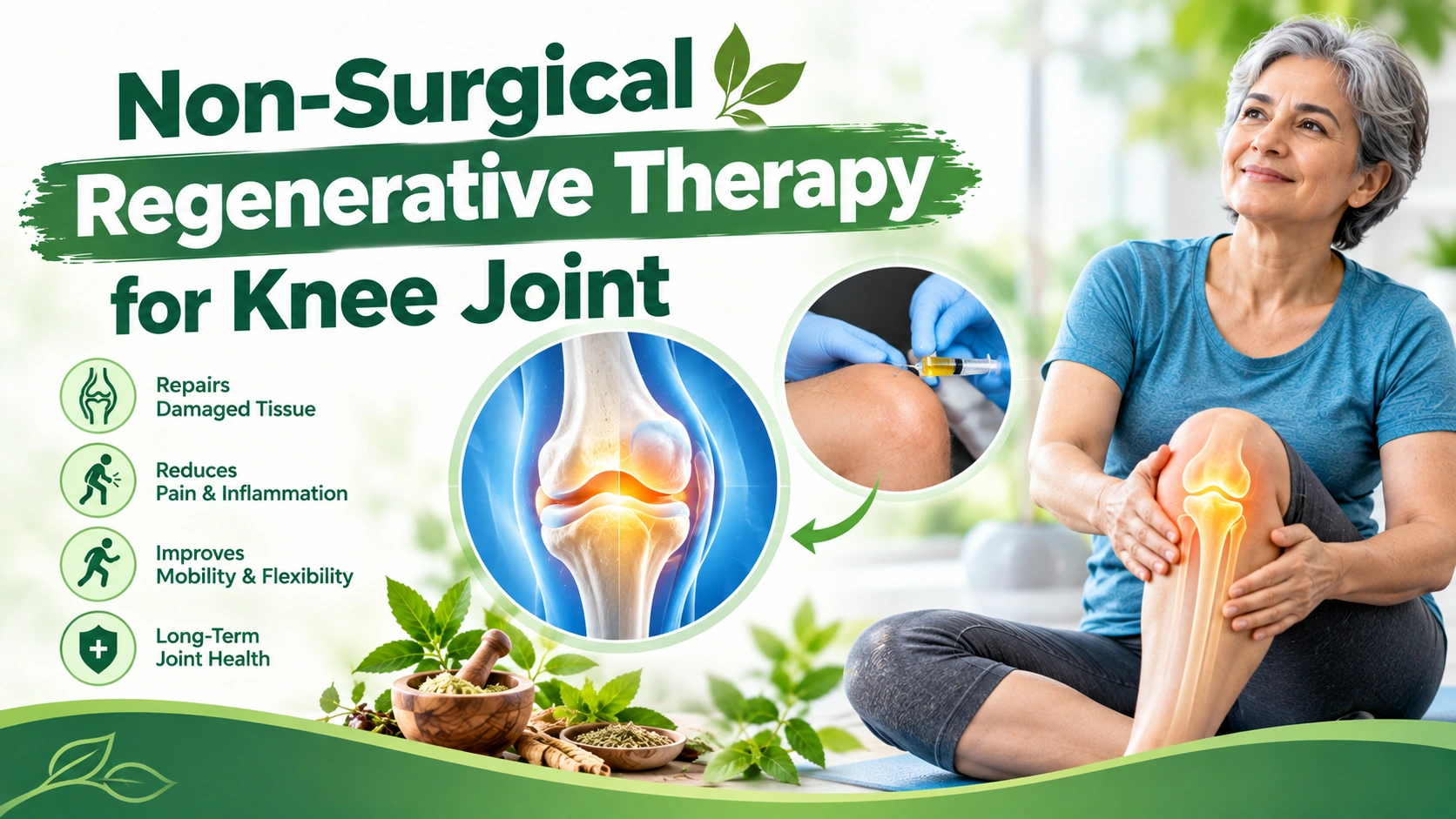
Short answer, right off the bat: yes, your knees can genuinely get better without going under the knife, and Ayurvedic treatment for knee pain treatment in Faridabad is quietly becoming the first stop for a lot of people before they even think about surgery. If your knee has started making sound effects that no knee should ever make, you're in the right place. Let's talk about what's actually going on in there, and what to do about it.
Why Do Knees Just... Give Up On Us?
Nobody plans for bad knees. One day you're taking the stairs two at a time, feeling like the fittest person in the building. A few years (or a few extra kilos, or one bad fall while playing cricket in college) later, you're holding the railing like it owes you money. It's rarely one big event. It's usually a slow leak.
In Ayurveda, a lot of this gets traced back to an aggravated Vata dosha; which basically means the natural lubrication in your joints starts drying up, cartilage thins out, and bone ends up grinding closer to bone than it should. Not a fun mental image, I know. But knowing the "why" actually helps in figuring out the "how do I fix this" part.
Why More People Are Skipping the Painkiller-on-Repeat Routine?
Here's the thing about painkillers; they're great at making today bearable, but they're not really fixing anything. It's a bit like turning off a fire alarm because the beeping is annoying, without checking whether there's actually a fire. That's exactly why so many people are now looking up knee joint treatment in Ayurveda instead of just refilling the same prescription every month.
At Karma Ayurveda in Faridabad, the way Dr. Puneet Dhawan and his team approach it isn't "here's a pill, come back if it still hurts." It usually looks more like this:
- Figuring out what's actually causing your specific imbalance (because your knee pain and your neighbour's knee pain might not have the same root cause at all)
- Herbal formulations picked for you, not off a shelf
- Some real talk about your diet and daily habits
- Hands-on therapies like medicated oil massage (Janu Basti) and fomentation
None of this is instant magic. It's more like retraining your body to do what it's supposed to do on its own.
Can Ayurveda Actually Help With Cartilage? Or Is This Just Marketing Talk?
Fair question, and I'd rather be upfront about it than oversell things. Knee cartilage regeneration ayurveda treatments won't hand you back the knees you had at 25. Anyone promising that is, frankly, selling you a dream. What they can realistically do is slow the damage down, calm the inflammation, and give the joint a better environment to hold on to whatever cartilage it still has.
And this isn't just something we're saying to sound nice. A study published in Phytomedicine back in 2003 (Kimmatkar et al.) looked at Boswellia serrata; an herb that shows up constantly in Ayurvedic joint formulas; and found patients reported less knee pain and better joint function after about 8 weeks of use. Separately, curcumin (the active compound in turmeric) has been reviewed in the Journal of Medicinal Food and other papers for its anti-inflammatory effect, with some researchers noting it holds up reasonably well against conventional options, minus the side-effect baggage.
So no, it's not sorcery. It's slow, researched, and reasonably grounded.
The Herbs That Keep Showing Up (For Good Reason)
If joint-pain herbs had a leaderboard, this bunch would be sitting at the top consistently:
- Boswellia serrata (Shallaki) – the one most studied for pain and inflammation
- Guggul (Commiphora mukul) – classic pick for stiffness and swelling
- Ashwagandha – handles the stress-and-inflammation combo
- Nirgundi – usually applied externally for swelling
- Rasna – Vata's arch-nemesis, basically made for joint issues
These are the usual suspects when people search for the best herbs for joint pain, and it's not just tradition talking; several of these have some pharmacological backing too.
Is There One "Best" Medicine? (Spoiler: Not Really)
If someone tells you there's a single best medicine for knee pain in ayurveda that works for absolutely everyone, that's your cue to ask a few more questions before you buy anything. Ayurveda just doesn't work that way. Your prakriti, your age, how long you've had the pain, other health conditions; all of it changes what actually gets prescribed.
That said, formulations like Maharasnadi Kwath, Yogaraj Guggulu, Sinhnaad Guggulu, and Mahanarayan Taila (for external use) come up often as best medicines for knee pain in Ayurvedic practice. Just please don't self-prescribe based on a five-minute video you watched at 1 a.m. Talk to an actual practitioner.
Ayurveda vs. Painkillers vs. Surgery: A Quick, Slightly Cheeky Comparison
| Factor | Painkillers | Surgery | Ayurvedic Knee Cartilage Treatment |
| Speed | Instant, like fast food | Fast fix, slow recovery | Slow-cooked, like a good dal; worth the wait |
| Root cause? | Nope, just quiets things down | Fixes the structure | Tries to fix the "why" |
| Side effects | Add up over time | Real surgical risk | Usually gentle when supervised properly |
| Long-term cost | Sneaks up on you | High, upfront | Easier on the wallet over years |
| Effort required | Minimal | High | Moderate, but steady |
What Treatment Actually Looks Like Day-to-Day?
Joint pain treatment in Ayurveda at a place like Karma Ayurveda usually isn't one thing; it's a combination working together:
- Internal medicines based on your dosha
- Panchakarma procedures where needed (Basti, Abhyanga, etc.)
- Diet changes; less cold, dry, processed food that aggravates Vata
- Light, joint-friendly movement (yoga, not sprint training)
- Weight management, because extra kilos are basically extra rent your knees are paying every day
This is what a genuine natural treatment for knee issues tends to look like; treating the whole system instead of just the sore spot.
A Bit of Honesty About Timelines
Ayurveda takes patience. It's not built for people who want results by tomorrow morning, and honestly, your knees probably need the slow approach anyway; they've earned a break from being rushed. Most people on a proper knee pain natural treatment plan start noticing real change over a few weeks to a couple of months, not overnight.
Key Takeaways
- Knee pain is often tied to aggravated Vata drying up joint lubrication
- Karma Ayurveda Faridabad, under Dr. Puneet Dhawan, focuses on the root cause, not just symptoms
- Herbs like Boswellia serrata and curcumin have actual published research behind them
- There's no universal "best" medicine; it depends entirely on the person
- Results build gradually alongside diet, herbs, and lifestyle changes
FAQs
Is Ayurvedic treatment effective for knee pain?
For a lot of people, yes; especially when herbs, diet, and daily habits are followed consistently instead of on-and-off.
Can Ayurveda fully regrow damaged knee cartilage?
Not fully, no; it mainly helps slow further wear and support what cartilage you still have.
How long before I notice a difference?
Usually somewhere between a few weeks and a couple of months, depending on how bad the damage already is.
Is long-term use of Ayurvedic knee medicine safe?
Generally yes, as long as it's prescribed and monitored by a qualified practitioner rather than picked up randomly.
Should I stop my current medication to try Ayurveda?
Please don't do that on your own; loop in both your doctor and your Ayurvedic practitioner first.
Disclaimer: This article is meant for general information only and isn't a substitute for professional medical advice, diagnosis, or treatment. Please consult a qualified doctor or Ayurvedic practitioner, such as the team at Karma Ayurveda Faridabad, before starting any treatment for knee or joint pain.