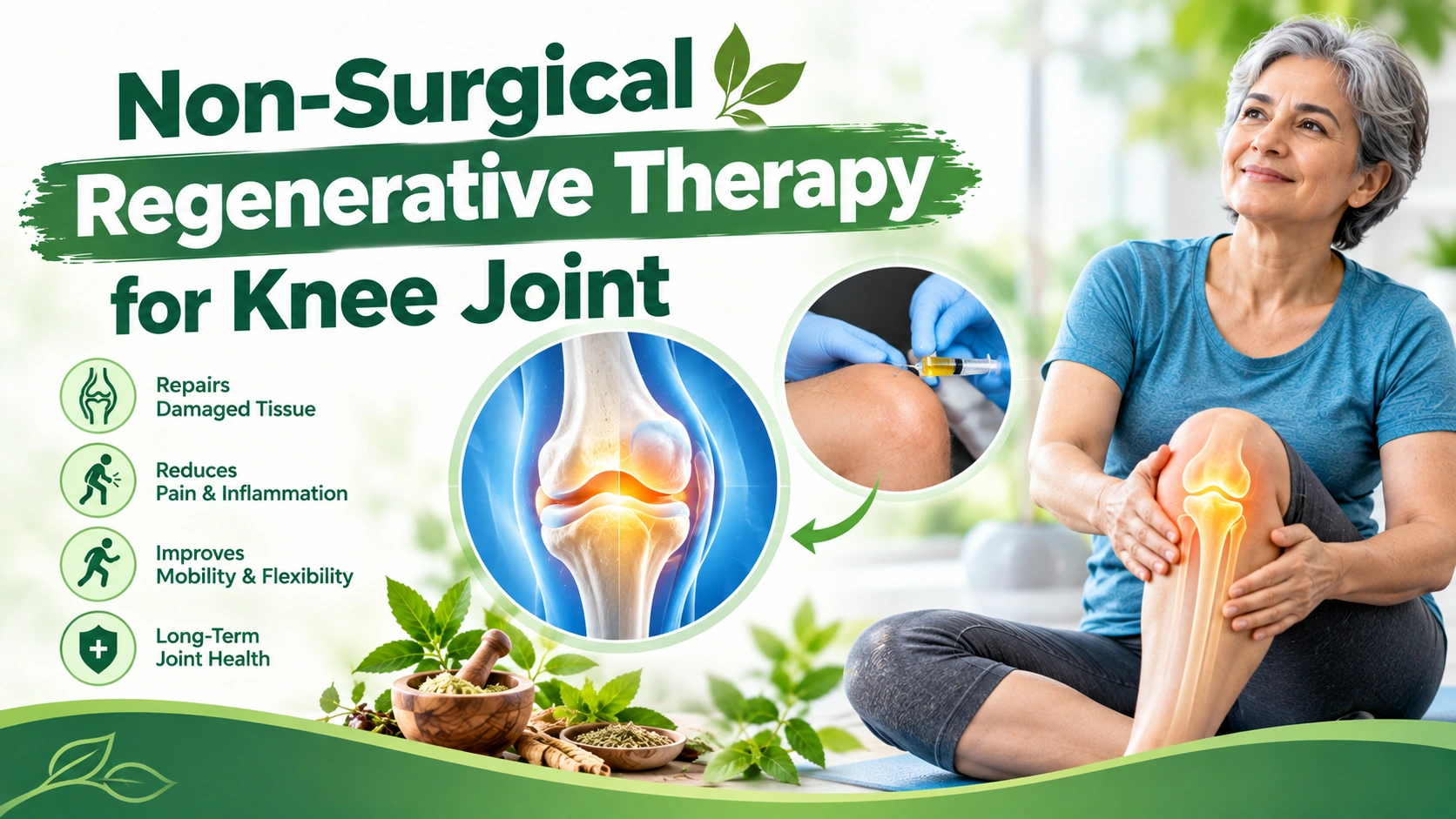
Short answer: yes, Ayurvedic treatment for knee pain is a real, well-documented thing, and no, it isn't "just eat turmeric and pray." It's a combination of herbs, oils, and a few lifestyle changes most people quietly skip.
I used to think knee stiffness was an "old people problem." Then I watched my 34-year-old cousin wince getting off his bike after a two-hour ride and, well, that theory fell apart pretty fast. Desk jobs, skipped warm-ups, one too many stairs skipped two-at-a-time in your twenties; it all adds up. And this is roughly where Ayurveda enters the chat, because instead of going straight for "let's just replace the joint," it tends to ask a slightly more annoying question first: why is the joint behaving like this in the first place?
So Why Does Ayurveda Care So Much About Knees?
There's a term for this in Ayurveda; Sandhivata. Basically, it means your Vata dosha (the one in charge of movement) has gotten a bit rowdy and dried things out where they shouldn't be dry. Think of your knee joint like a door hinge. WD-40 keeps it smooth. No oil, and it creaks every time you move. That's Vata doing its thing in your joints, and that's also why you'll hear so much about knee lubrication in Ayurvedic circles; a lot of the treatment is literally about putting the oil back where it belongs, inside and out.
A fairly standard joint stiffness treatment in Ayurveda plan usually looks something like this:
- Herbs like Shallaki (that's Boswellia serrata for the science crowd), Guggulu, Ashwagandha, and Rasna, usually taken together
- Abhyanga, a warm oil massage; basically your knee gets a spa appointment while the rest of you watches TV
- Basti therapy, which is a medicated enema aimed at calming Vata. Sounds odd on paper, and yes people always raise an eyebrow when I mention it, but practitioners swear by it for joint issues
- Cutting back on cold, dry, over-processed food, because apparently your samosa habit and your knee stiffness might be distant cousins
- Light movement; yoga, gentle stretching; not "lie in bed and wait it out"
Okay But Does Any Of This Actually Work? (The Boring-But-Important Bit)
I get it. The second someone says "ancient remedy," a tiny alarm goes off somewhere in your brain that says "citation needed." Fair enough. So let's actually look at what's been tested.
Boswellia serrata, or Shallaki, is probably the most-studied medicine for knee pain in ayurveda, and it's not just Ayurvedic doctors saying so. There's an older but still widely cited crossover trial by Kimmatkar and his team where patients on Boswellia extract reported decreased knee pain, increased knee flexion and increased walking distance, along with reduced swelling in the joint, compared to those given a placebo. Not a huge sample size, but a proper double-blind design, which matters.
A newer study from 2024 took it further and actually looked inside the joint using MRI scans, not just asking people "does it hurt less?" A standardized Boswellia extract (they called it SN13108F) was evaluated for cartilage morphology, pain, and joint function in volunteers with knee osteoarthritis over 180 days. Translation: they checked whether the cartilage itself looked any different on a scan, which is a much harder thing to fake than a pain score.
There's also this rather large trial; 440 patients, published in Rheumatology International; comparing an Ayurvedic combo (Tinospora cordifolia, ginger, amla, Boswellia) against glucosamine and celecoxib, a standard NSAID doctors prescribe for arthritis. The study measured pain and functional difficulty scores across all four groups over 24 weeks.
This is often the study people point to when talking about knee replacement alternatives in ayurveda; not because it proves nobody ever needs surgery, but because it shows the non-surgical route deserves an actual seat at the table.
And then there's the part that gets Ayurveda fans genuinely excited; knee cartilage regeneration ayurveda. A 2024 study combining Boswellia with celery seed extract found levels of collagen-related markers in participants, suggesting a possible link to cartilage synthesis, along with fewer inflammatory markers. I want to be honest here; this isn't "grow yourself a brand new knee" territory. It's more like "we found something that nudges the body toward repair," which, in research terms, is still a pretty big deal.
A Comparison Table, Because Nobody Wants Three More Paragraphs
| Approach | What It Actually Feels Like | How Long It Takes | How Much Effort It Wants From You |
| Ayurvedic knee joint treatment in ayurveda | A slow, warm hug for a cranky joint | Weeks to months | Medium, but you have to show up daily |
| Painkillers | Hitting snooze on the pain | A few hours | Low, but it comes back |
| Physiotherapy alone | Homework, but for your leg | A few weeks | High, discipline required |
| Knee replacement surgery | The full system reboot | Months of recovery | Very high, surgery plus rehab |
Where Does Something Like Karma Ayurveda Fit In?
If you've been Googling Karma Ayurveda for joint stiffness treatment, you've probably noticed it's rarely presented as "here, take this one bottle." It's usually part of a bigger, more personalized picture; figuring out which dosha is out of whack for you specifically, then building a plan around it. Your knee and your neighbor’s knee might look identical on an X-ray and still need completely different treatment approaches, because Ayurveda isn't really diagnosing the knee; it's diagnosing you.
Basically, it's less "miracle bottle" and more "customized plan that happens to also involve a lot of warm oil."
Key Takeaways
- Knee stiffness in Ayurveda is mostly linked to a Vata imbalance called Sandhivata
- Ayurvedic treatment for knee pain usually combines herbs, oil therapy, diet changes, and gentle movement, not just one thing
- Boswellia serrata (Shallaki) has real, published clinical backing for pain relief and improved joint function
- Some newer studies hint at knee cartilage regeneration ayurveda support through improved collagen markers
- Ayurveda often comes up in conversations around knee replacement alternatives in ayurveda, especially for early to moderate cases
- None of this is instant. Give it weeks, not days, before judging whether it's working
FAQs
Is Ayurvedic treatment effective for knee pain?
Quite a few people genuinely feel better with consistent use, and herbs like Boswellia have real clinical studies backing them up.
How long does Ayurvedic knee treatment take to show results?
Usually a few weeks to a couple of months; it's a slow burn, not an overnight switch.
Can Ayurveda actually regenerate knee cartilage?
Some early research shows promising signs around cartilage-supporting markers, though it's not the same as growing a brand-new joint.
Is Ayurvedic treatment a real alternative to knee replacement surgery?
For milder, early-stage stiffness it's often worth exploring, but more serious joint damage may still need a surgeon's opinion.
What actually causes knee stiffness according to Ayurveda?
It comes down to an aggravated Vata dosha drying out the natural lubrication your joint needs to move smoothly.
Disclaimer
This blog is meant for general reading, not medical advice. It shouldn't replace a proper consultation with a qualified Ayurvedic practitioner or doctor. If you're dealing with ongoing knee pain or existing joint damage, please get it looked at by a professional before trying any new treatment.